


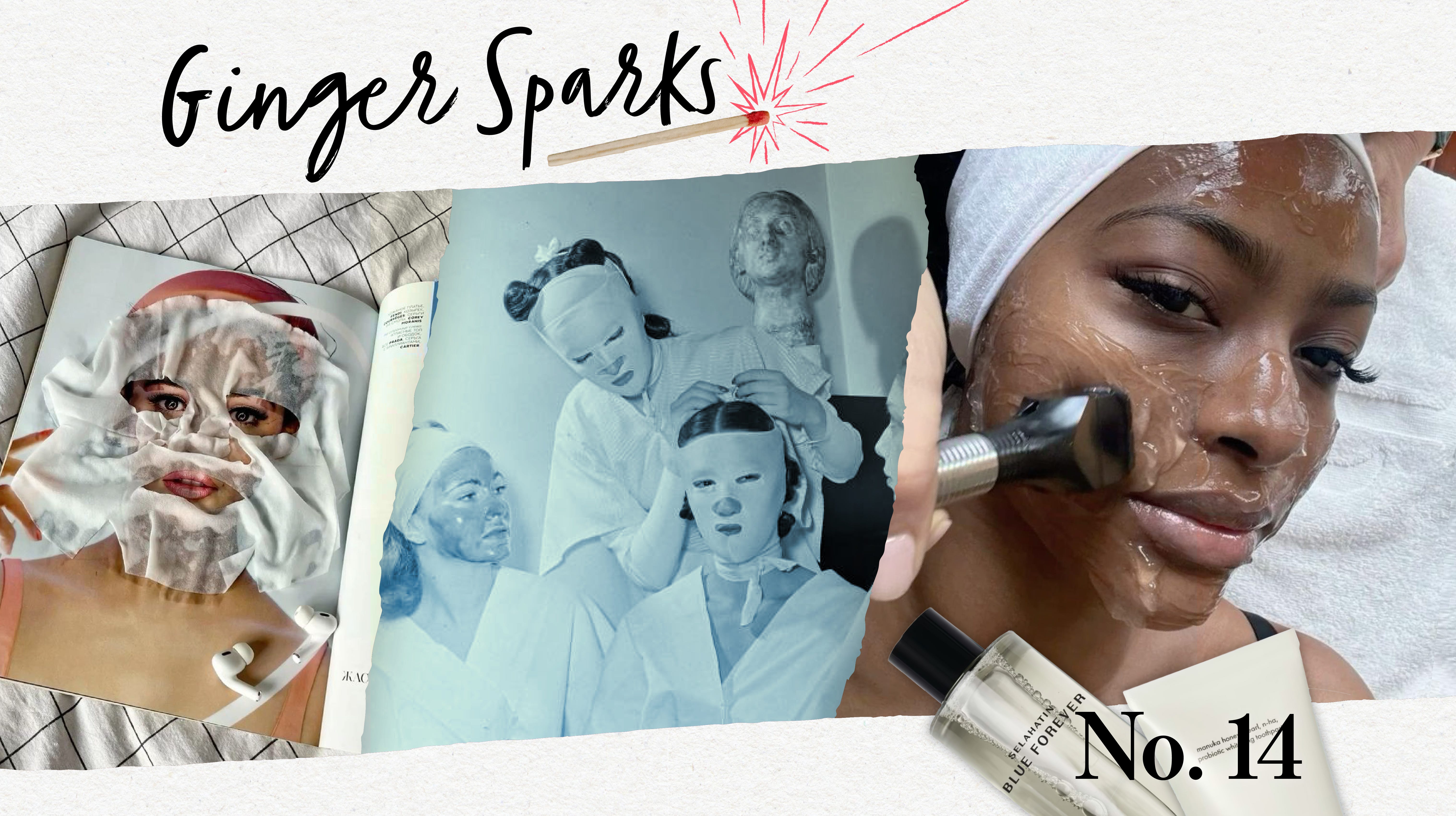
Beauty expertise is decentralizing. Beauty and wellness continue to expand into new corners of daily life. From $500 facials to skincare-driven travel and luxury toothpaste, the next wave of beauty business isn't coming from brands anymore. It's coming from treatment rooms becoming brands, destinations becoming retail, and rituals becoming categories. This week's Sparks look at three areas where the economics and the power structures of beauty are shifting.
The $500 Facial Is Actually a Brand Launch
Luxury facials are entering a new price bracket. In Jamie Rosen’s Town & Country article, “Do You Need a $500 Facial?, the most sought-after treatments now routinely start around $500 and can climb well beyond that, blending spa rituals with technologies like radiofrequency, microcurrent, ultrasound, and LED therapy. What was once a simple cleanse-and-massage appointment has evolved into a device-driven treatment designed to sculpt, lift, and stimulate collagen. The rise of the celebrity facialist helps explain the shift. New York aesthetician Sofie Pavitt, often called the “acne whisperer,” has built a cult following for targeted acne treatments and streamlined routines. Earlier pioneers like Tracie Martyn helped popularize the red-carpet facial as a non-surgical alternative to injectables. We confess: we’ve tried the Tracie Martyn Firming Serum. It’s excellent! The facialist-to-founder pipeline isn’t entirely new. Mario Badescu built a skincare brand from his New York salon in the 1960s, where classic European facials, still offered today, starting at about $65, laid the groundwork for the treatment-room-to-product model long before today’s tech-stacked premium facials options. What has changed is the scale. Modern facialists such as Shani Darden, Joanna Czech, Joanna Vargas, and Sofie Pavitt are translating treatment-room expertise into product lines and retail brands. As CNA Lifestyle reports, today’s facials increasingly combine multiple technologies and high-performance serums into a single appointment, promising visible results without needles.
Ginger Spark: The modern facialist may be emerging as beauty’s newest power player. As treatments become more technical and expensive, the treatment room is becoming a testing ground for products, techniques, and future skincare brands. So the real question is: when you book a $500 facial, are you buying skincare—or investing in the next beauty brand?
Glowcation: How Skincare Travel Is Reshaping Wellness Tourism
For a growing group of beauty-focused travelers, the itinerary starts with a visit to the skin clinic. The idea of the glowcation reframes travel around facials, dermatology appointments, spa rituals, and destination beauty shopping. Instead of returning home with souvenirs, travelers come back with brighter skin, new routines, and deeper knowledge of global beauty culture. Seoul’s advanced dermatology clinics, Paris pharmacy hauls, European thermal spas, and Ayurvedic retreats in India are becoming anchor experiences for these beauty-driven trips. Symrise’s Always Inspiring More Blog recently explored the phenomenon in its look at traveling for better skin, highlighting how skincare treatments and beauty rituals are increasingly shaping where people choose to go. Luxury travel curators like Blue Sky Escapes spotlight spa retreats, wellness destinations, and restoration-focused itineraries, reflecting the growing interest in trips built around skin health and self-care.
GingerSpark: Skincare is becoming a travel motivation in its own right, with treatments, pharmacy culture, and spa rituals shaping where people choose to go. Incumbent brands such as Kiehl’s and Supergoop, alongside newcomers like Salt & Stone and Rhode, are taking a page from the apparel playbook by partnering with resorts and running promotions.
The Margin Is in the Ritual, Not the Formula
Oral care is getting the luxury treatment again. A recent Wall Street Journal article on $28 toothpaste and $14 dental floss highlights how dental products are entering the premium beauty and wellness conversation. Sleek packaging, functional ingredients, and branding that look closer to skincare than traditional hygiene. In many ways, this attention is cyclical. Oral care has periodically bubbled up as a cultural focus, and it’s interesting to see it happening again. The last surge started before the pandemic and accelerated during it. Zoom calls put faces and smiles on screen all day. People began paying closer attention to their teeth, much as they had to their skin. Consumer research supports the shift. Mintel notes that roughly 70% of US consumers now view oral health as part of self-care, pushing interest in new tools and upgraded routines. We’ve also touched on this broader shift in Destigmatized Care, Finally Out Loud, where oral health emerged as one of several areas people are beginning to talk about more openly as part of everyday wellness. Still, the luxury turn raises an interesting tension. As toothpaste and floss become “luxe rituals,” how much of the upgrade actually changes outcomes? In Counter Intelligence: Inside the White Smile Economy, Dr. Lucca notes that many premium products may not outperform traditional ones, even as the category becomes more design-led and experience-driven.
GingerSpark: Oral care is resurfacing as part of the broader wellness and beauty conversation, with premium products and design-driven tools reframing a basic routine as modern self-care.
