
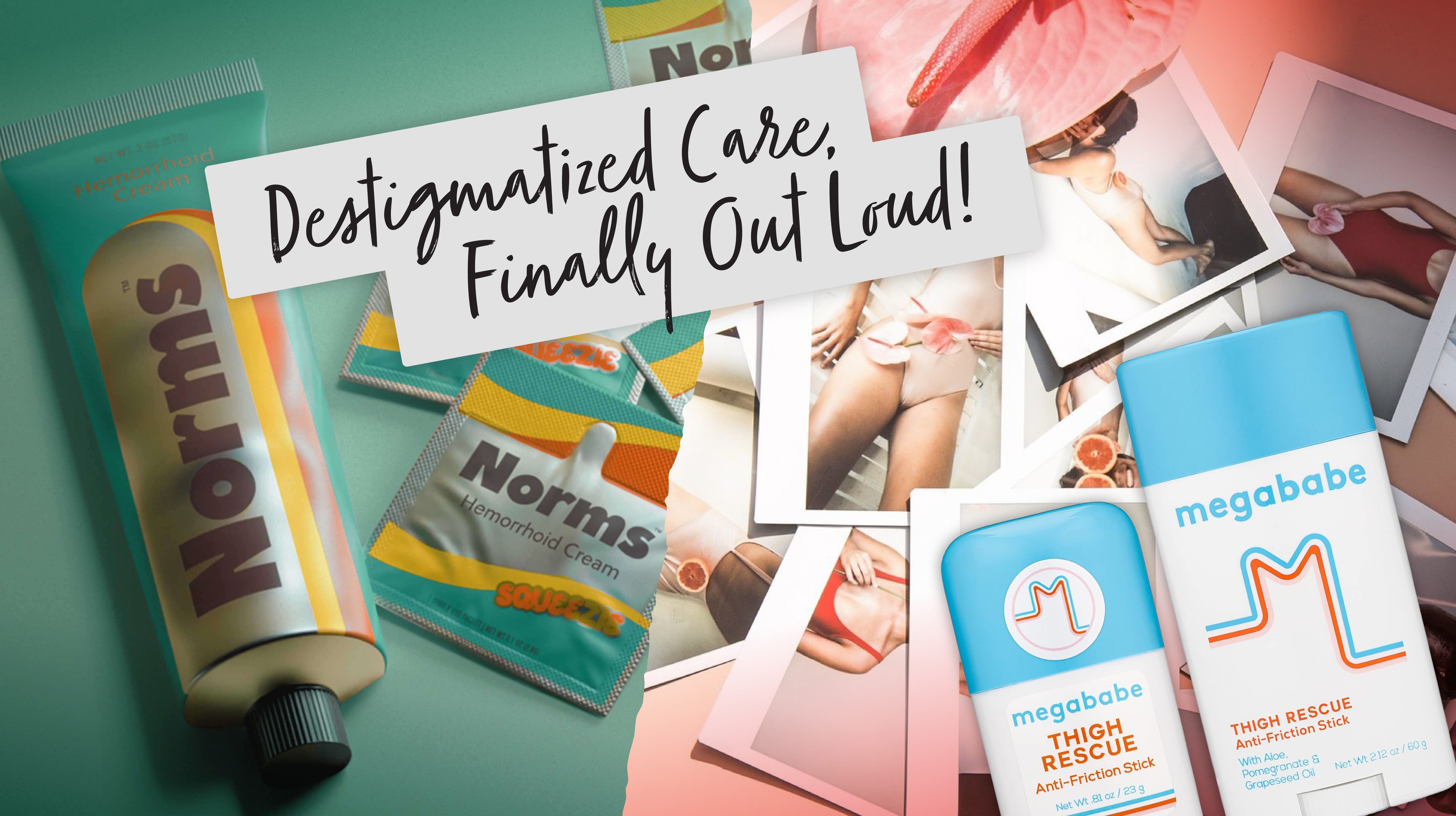
Destigmatized Care, Finally Out Loud!
Why Ignored Needs Are Becoming Scalable Markets
Wellness retail has long relied on discretion: soft colors, careful language, and an unspoken agreement about which parts of the body are allowed to appear. Norms deliberately breaks that contract. Norms entered retail by naming a condition most brands still avoid — and making it visible. The reaction wasn’t uniform: curiosity, laughter, pause, but that friction was the point.
Norms is part of a broader wave of beauty, wellness, and consumer-health brands reframing once-taboo conditions as areas worthy of care, design, and conversation. Hemorrhoids may feel like new territory, but the cultural shift underneath them isn’t. Humor replaces shame. Education replaces euphemism. Packaging and tone signal modern life, not a dated pharmacy aisle!
The traction is real. Within two months on Amazon, Norms rose to No. 3 in non-paid search presence, behind only Preparation H and Doctor Butler’s, per Wall Street Journal. Backed by True Beauty Ventures and Pete Davidson’s venture studio, Cardiff Giant, the brand pairs near-identical actives with legacy products in radically different cultural framing. Swirling ’70s graphics, mustard-and-turquoise packaging, merch drops, and irreverent educational content turn a private pain point into something approachable and communal.
What makes this moment notable is how long it has been in the making. Over ten years ago, we were encouraging clients to think differently about underarm, intimate, and chafing care, as well as hormonal health. For goodness’ sake, we were saying “sleep is the new sex” at a time when even using anatomically correct language like vagina could stall a meeting! I still remember standing in front of a room full of professionals and having to say the word orgasm out loud just to make the point! Many of these needs had to be carefully alluded to rather than named outright, despite affecting millions of people every day.
In the late 2010s, that groundwork began to surface more publicly. Conversations around hormonal health and femcare helped normalize cycles, discomfort, and bodily change as everyday realities rather than niche issues. That shift is reflected in broader industry thinking around femcare and wellness, including this perspective on the evolving femcare landscape.
In parallel, we were also exploring a broader lens on pleasure: not as provocation, but as comfort, agency, and self-knowledge, introducing the idea to industry audiences still adjusting to anatomically direct language. That framing treated intimate and bodily care as a natural extension of beauty and wellness, rather than something to euphemize or contain. What feels different now is how far that logic has traveled!
The pattern is familiar. Platforms like Ro reframed stigmatized needs: from hair loss and sexual health to weight management via GLP-1s, as ongoing, normalized care rather than one-off fixes. Megababe named chafing and underarm care directly, treating friction as a use case rather than a flaw. Pelvic health made consumer-accessible by The Pelvic People. Postpartum realities brought into view by Frida. Acne made visible by Starface. Norms extends this logic to a condition that was previously omitted. These are not niche needs but widespread experiences that have long been underserved due to stigma, not a lack of demand.
What’s changed is the environment. Consumers now expect clarity, specificity, and respect. Social platforms allow brands to educate beyond what fits on a box. Packaging and tone directly influence whether someone feels comfortable engaging with a product. Destigmatization is no longer incidental. It’s a growth lever!
Why It Matters
The next phase of growth in beauty and wellness won’t come from creating new aspirations. It will come from finally addressing long-ignored realities honestly and without apology. As personal and intimate care becomes more visible, better designed, and more culturally fluent, it shifts from something hidden or tolerated into something intentional and normalized. Care doesn’t stop at the neck, the underarm, or the bikini line. It never did. What’s different now is that we no longer have to whisper about it.


