


What QVC’s Bankruptcy Means for the Beauty Brands It Built
In 2020, the NYT headline read QVC: Quarantine, Value, Convenience, as coronavirus kept shoppers out of stores and captive at home, discovering cheerful hosts and surprisingly modern brands. Even before Buy Now, Pay Later took off, QVC and HSN offered Easy Pay, the equivalent of layaway, with the near-immediate satisfaction of receiving a product with a single payment. With rumors of financial difficulties swirling recently, this week’s announcement of a Chapter 11 bankruptcy was no surprise but still troubling. The QVC Group — which includes the QVC, HSN, Ballard Designs, Frontgate, Garnet Hill, and Grandin Road brands — excelled very much in the beauty space.
We literally ran into QVC hosts and savvy beauty buyers at CEW events. They helped revive distressed brands (RMS Beauty and Rose-Marie Swift with “RMS Hour” and “QVC Customer Choice Beauty Awards” after Barneys closed) and brought in niche and foreign brands like Gatineau. However, last year in a telling move, the company shut down its HSN campus in St. Petersburg, Fla., resulting in hundreds of layoffs. HSN operations were folded into QVC’s headquarters in West Chester, Pa. As an avid shopper of both channels, Jamie would say they failed to differentiate the branding from that point on, almost blurring the two with QVC + HSN streaming. While QVC made bold moves into the “Age of Possibility” (hosting a star- studded event), “Over 50 & Fabulous,” even “Menopause Mondays,” and a “50+ & Unfiltered” podcast, HSN seemed to be left floundering. Worse, brands increasingly began to double up on both channels, including Beekman 1802 and others.
GingerSpark: The outcome of this bankruptcy filing remains to be seen, but there are solutions beyond moving into social/live shopping and developing new customers. Nearly a year ago, ShopHQ (also heavy on beauty brands) went out of business. That should have only strengthened QVC’s and HSN’s positioning. Live shopping and a TikTok agreement alone will not fix a visible branding problem. Customers now demand a point of view, compelling specialized brand offerings, and world-building!
Diptyque’s Quiet Reinvention: How a 63-Year-Old Brand Stays Relevant
One brand not resting on its laurels is Diptyque. Founded in Paris in 1961 by trio Desmond Knox-Leet, Christiane Gautrot, and Yves Coueslant, Diptyque began as an eclectic “bazaar” on Boulevard Saint-Germain, selling fabrics, wallpaper, and travel treasures. They transitioned to luxury scented candles in 1963 and launched their first perfume, L’Eau, in 1968, defining a niche, artistic aesthetic. Fast forward to 2026, and everyone, from Hypebeast to social media, is buzzing about the 63-year-old brand’s facelift!
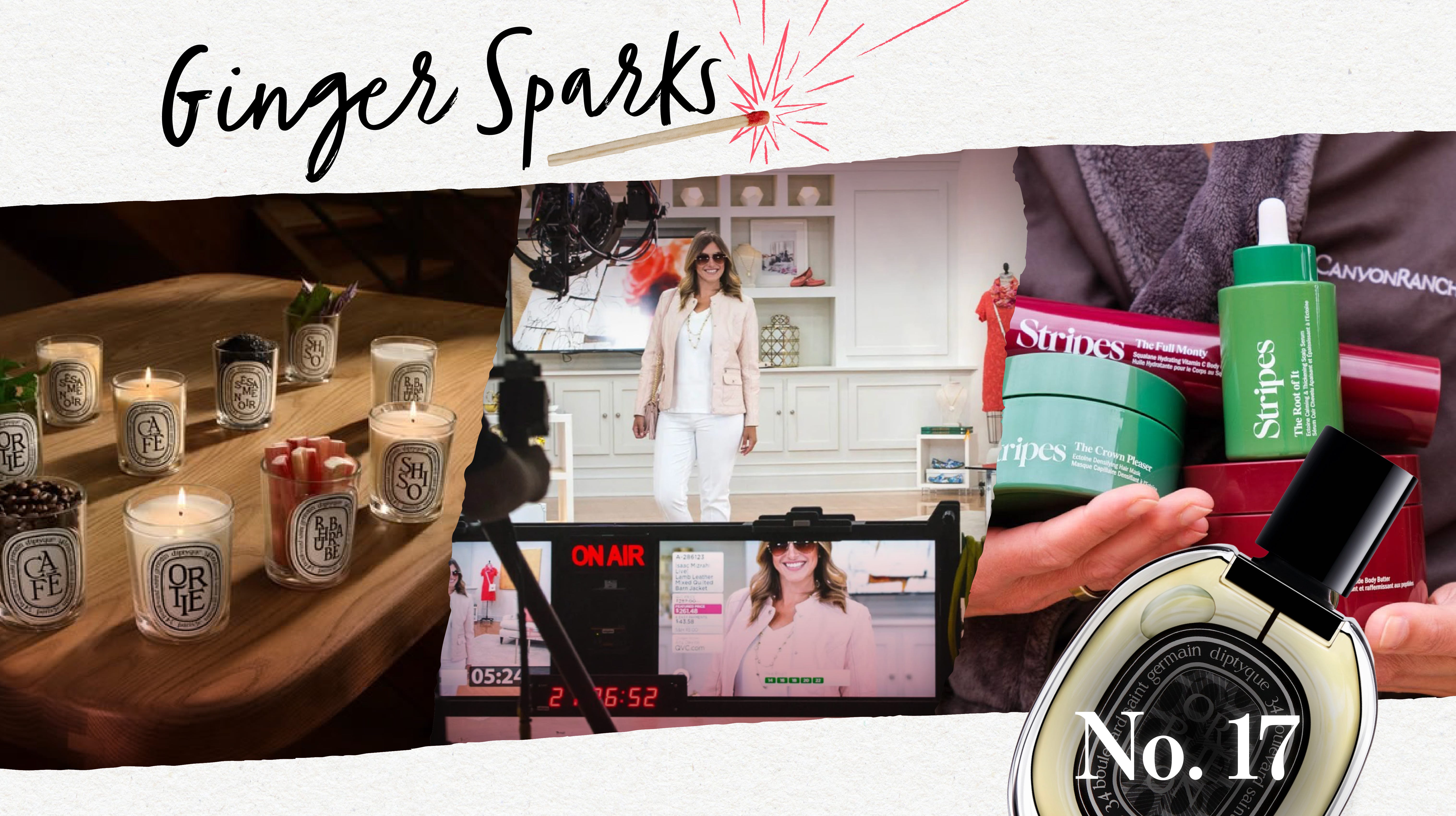
According to Fashionista, “The new collection doesn’t introduce entirely new historical references; instead, it deepens and elevates existing ones, honoring the brand’s legacy while subtly modernizing its expression,” says Jessie Dawes, chief marketing officer of Diptyque Americas. Diptyque also collaborated with perfumers Alexandra Carlin and Olivia Giacobetti to introduce five new scents — Cafe (Coffee), Ortie (Nettle), Sesame Noir (Black Sesame), Rhubarbe (Rhubarb), and Shiso — to join its extensive candle collection. The makeover comes with another future-minded facet: sustainability. Diptyque focused on waste reduction with its candle re-vamp, incorporating this goal in multiple ways. Starting in September, select candles will be refillable. The updated vessel design also uses a new, proprietary pressed-glass technique, resulting in an 18% reduction in carbon footprint, per the brand.
GingerSpark: Graceful and focused reimaginings are at the heart of keeping brands fresh and relevant. Hypebeast also reported on the 2026 re-release of Diptyque’s Orpheon, originally introduced in 2021 and now the gender-neutral woody icon, redefined by Natalie Cetto, featuring green tangerine and Japanese yuzu notes. We applaud brands that recognize when it’s necessary to breathe new life into a new era.
Menopause Checks Into the Spa
Stripes Beauty, the pro-aging brand founded by Naomi Watts and majority-owned by L Catterton, just partnered with Canyon Ranch to bring menopause-focused treatments into its Tucson and Lenox resorts, with Austin to follow in Autumn 2026. A Hormonal Support Massage at $250, a Root and Crown Renewal Ritual at $150, and OB/GYN Dr. Somi Javaid on-site this week at Canyon Ranch’s Enchant at the Ranch festival. Getting in took a full year of vetting. Per Stripes CEO Cara Kamenev: “They don’t just take any products and say, this will be a menopause product.”
This is not Stripes’ first hospitality move. The brand partnered with Equinox Hotels earlier this year on a 2.5-hour menopause spa circuit at $825. The strategy is consistent: place products inside environments where the need already exists. Canyon Ranch had already built its own M/Power menopause retreat program. Stripes is layering onto committed institutional infrastructure.
GingerSpark: A woman navigating perimenopause at Canyon Ranch is not a prospect. She is already there, paying attention, and looking for solutions. That is the logic we tracked in Meet Them Where They Are and Beauty’s Expanding Ecosystem, and it is the same instinct QVC was chasing with Menopause Mondays mentioned above. The difference is that Canyon Ranch built a full menopause retreat program before Stripes even arrived, which means the audience is self-selected and already converted. Stripes now sits in two of the most credible wellness hospitality environments in the country, and the brands that build that kind of trust before the category gets crowded will have a significant advantage.
