


Locker Rooms Are Becoming a Beauty Retail Channel Beginning March 19, Le Labo will become Equinox’s global amenity partner, replacing Grown Alchemist in locker rooms with products featuring the brand’s signature basil scent. For longtime members, this shift may feel familiar. Equinox first partnered with Kiehl’s in 2009, bringing the brand’s apothecary-style body care into its locker rooms. At the time, the deal reportedly placed $10 million worth of products into Equinox gyms, and members quickly became known for refilling their bottles straight from the dispensers.
Despite the brand rotations, the strategy has remained remarkably consistent. Kiehl’s, Grown Alchemist, and Le Labo all share a similar positioning: apothecary heritage, ingredient credibility, gender-neutral appeal, and a luxury wellness aesthetic that resonates with the Equinox customer. At the same time, these partnerships are spreading across the premium fitness landscape. Lifetime Fitness now carries Kiehl’s products at many of its locations, suggesting that gyms are increasingly seeing beauty brands as part of the broader wellness experience.
When Equinox first teased that a new amenity partner was coming, the internet quickly started building its own locker-room wishlist, with names like Aesop, Malin + Goetz, Byredo, Nécessaire, CeraVe, and La Roche-Posay circulating online, an interesting reminder of just how many beauty brands already sit within the broader fitness and wellness ecosystem.
Ginger Spark: The locker room has quietly become one of beauty’s most powerful trial environments. After a workout, when skin is warm, pores are open, and routines are already in motion, members encounter products in a highly experiential setting. For beauty and wellness brands, it’s a rare opportunity to place products directly into the daily rituals of a high-value, wellness-oriented consumer. It’s another example of brands meeting consumers where they already are, embedding themselves into everyday routines rather than relying solely on traditional retail—something we explored previously in Meet Them Where They Are: Embedded Retail for a Post-Mall Generation. In an era where experience, scent, and lifestyle ecosystems drive discovery, the gym may be one of the most strategic beauty retail channels hiding in plain sight.
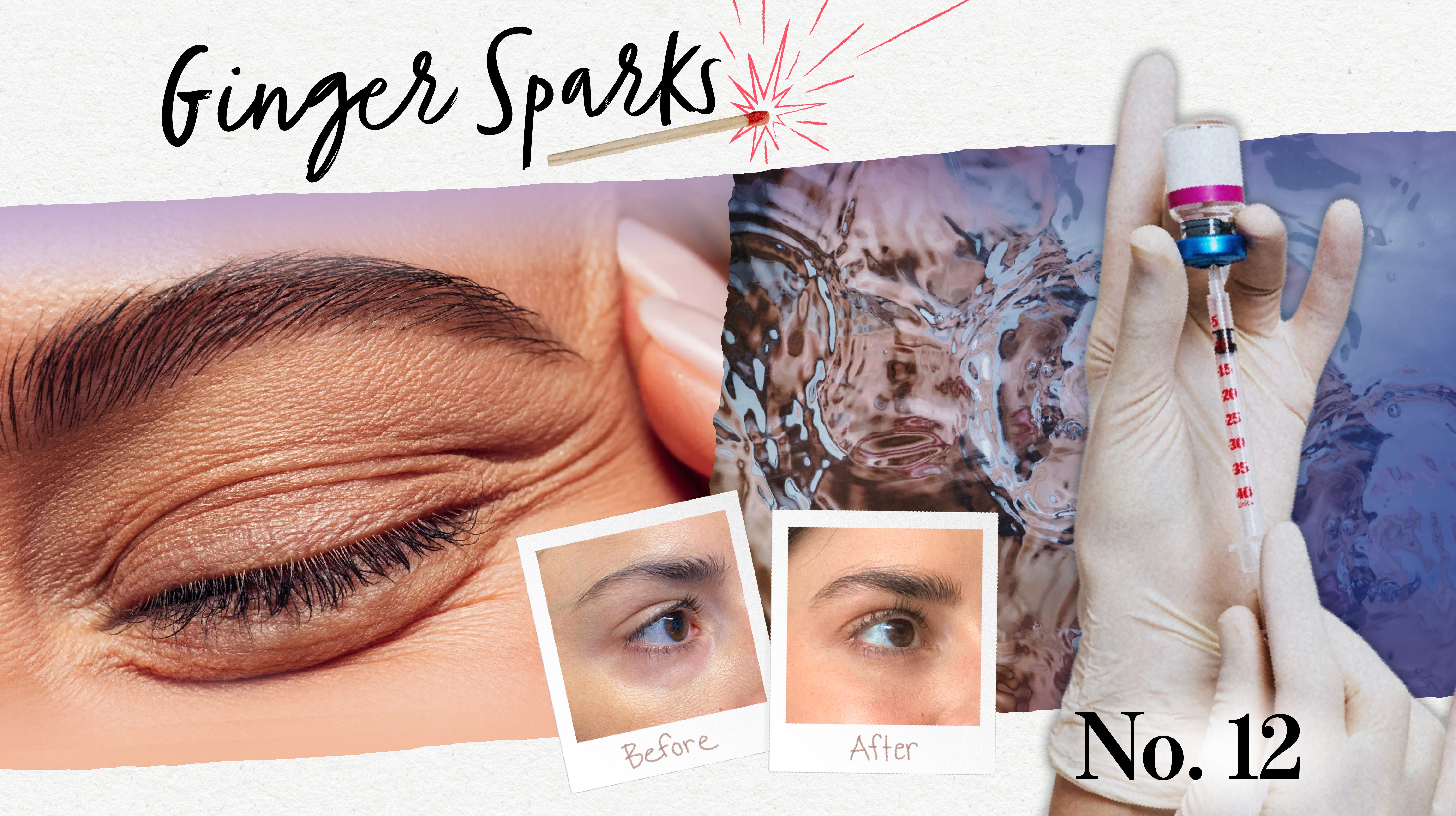
Blepharoplasty Is Getting More Attention Than Filler The under-eye area is seeing increased interest in surgical approaches, and early signals suggest this may reflect a shift in how consumers think about correction. Recently, fashion influencer and blogger Danielle Bernstein of WeWoreWhat shared that she underwent a lower blepharoplasty with a small skin pinch and fat pad removal and transfer, performed by New York facial plastic surgeon Dr. Ira Savetsky, to address the under-eye area. The procedure targets one of the most stubborn aesthetic concerns: bags, hollowness, and shadowing beneath the eyes, issues that skincare and even fillers often struggle to fully correct.
A recent Town & Country Looking Glass feature, “What the Bleph?” by Danielle Stein Chizzik (March 2026 issue), explains why the area can be so challenging. Experts note that dark circles are often genetic or vascular, while bags and hollowness frequently stem from shifts in the fat pads and skin structure around the eye. While injectables once dominated the conversation, the article notes growing caution around tear trough filler, which can sometimes create unnatural convexity or migration under the eye. Many surgeons are instead exploring fat repositioning, microfat grafting, and skin-pinch procedures to improve the transition between the eyelid and cheek.
Ginger Spark: Interest in blepharoplasty reflects a broader shift toward structural correction rather than temporary volume fixes. As the eye area receives increasing attention, it also creates opportunities across beauty and accessories. Skincare brands can emphasize actives like retinol, peptides, and daily SPF formulated for the eye area, while accessory brands have an opening to position sunglasses, visors, and hats as protective tools that support long-term eye-area health. In a market focused on prevention and maintenance, these products become part of the same ecosystem surrounding aesthetic treatments.
Healthcare Clinics Are Adding Cosmetic Services Planned Parenthood clinics may soon offer more than reproductive healthcare. According to reporting from Allure and The Wall Street Journal, some locations are exploring cosmetic services such as Botox, fillers, laser hair removal, and IV hydration, alongside existing offerings like birth control, STI testing, and abortion care. The initiative is partly financial. Clinics are looking for ways to offset declining funding and rising operating costs while attracting new patients.
The WSJ also reports that Planned Parenthood Mar Monte is expanding into midlife care through Poppy, a telehealth provider for perimenopausal health. Virtual visits start at $250, and clinicians may prescribe treatments ranging from hormone therapy to weight-management medications, including low-dose Zepbound, with the potential to offer GLP-1s more broadly in the future. The move suggests an effort to reach patients at different stages of life, rather than relying solely on its traditional reproductive health demographic.
Interestingly, the idea of layering services to build stronger health ecosystems is not entirely new. Back in 2018, during graduate school, Michelle worked directly with Planned Parenthood on a concept project that examined analogous models of integrated wellness drawn from spas, gyms, and beauty services. The work explored how layered experiences and services could bring people through the door while supporting the financial sustainability of care providers.
Ginger Spark: The real signal is that aesthetic services are becoming a financial engine for healthcare systems. Cosmetic procedures are typically paid out of pocket, making them one of the few medical services with strong margins. As healthcare providers search for more sustainable operating models, beauty treatments may increasingly function as gateway services. They can help subsidize broader care while bringing patients into long-term health ecosystems.
