


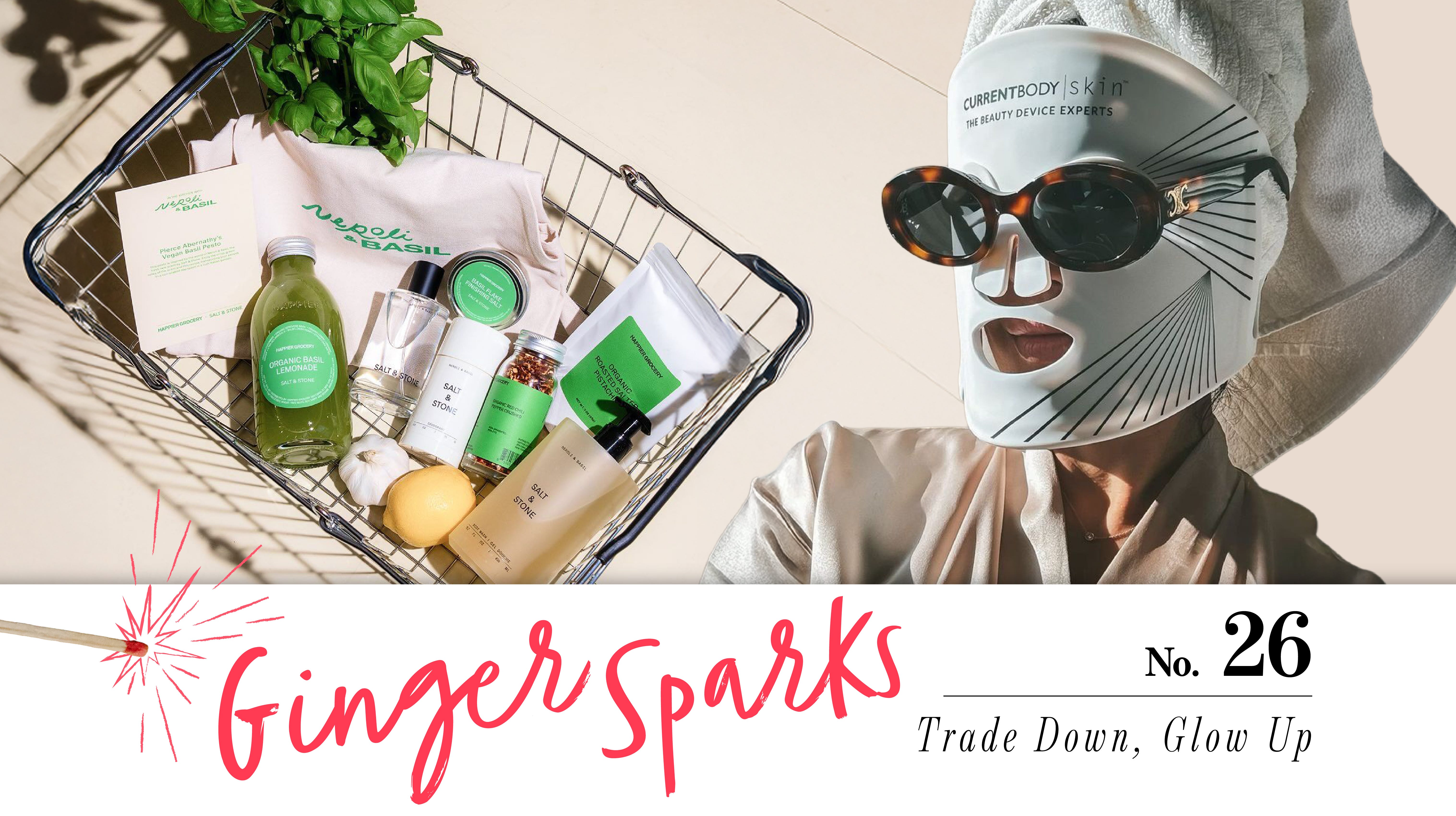
Something is shifting in how people decide what deserves their money. Three reports landed in the last few weeks mapping the same instinct from three different angles: aesthetic consumers, beauty-routine trade-offs, and the grocery cart. The conclusion across all of them is the same: spending isn’t disappearing, it’s being reassigned. Trading the luxury bag for Botox isn’t a sacrifice; it’s a preference. The beauty routine gets audited, and the recurring upkeep loses. Store-brand staples fund the collagen smoothie. What reads as austerity from the outside is, in fact, a very deliberate hierarchy, with beauty, wellness, and aesthetics at the top.
You Wear Your Face Every Day
A new Allergan Aesthetics report puts a number to a feeling most of us already have: 53% of consumers say they’d cut luxury spending to afford aesthetic treatments. The bag, the vacation, the designer anything, all negotiable. The Botox appointment, apparently, is not. Among younger adults surveyed, 62% say satisfaction with their appearance shapes their mental well-being, and 53% say the same about their physical well-being.
Sacramento NP Shawna Chrisman, one of the practitioners cited in the report, tells NewBeauty that her patients have crossed a threshold: “Consumers increasingly view aesthetic treatments as an investment in themselves rather than a traditional luxury purchase. Many patients are willing to reallocate discretionary spending toward treatments that deliver lasting personal value and help them feel their best every day.”
The logic underneath that isn’t vanity, it’s math. You wear your face every single day. The handbag stays in the closet. Gen Z and younger Millennials, per the report, aren’t trying to look different anyway. They’re trying to feel like themselves, and they’re willing to fund that over almost anything else.
Ginger Spark: Once a category gets filed under “self” rather than “luxury,” it stops being the first thing people cut. Culturally, this is the moment aesthetics finishes its migration out of the “indulgence” column and into the same mental real estate as therapy, wellness, and the gym: things you justify because they make you functional. For retail, that migration has a direct cost. Luxury goods are no longer competing against one another for discretionary dollars. They’re competing against Botox, and Botox is winning on ROI.

The Glow Down, Itemized
The other side of that same instinct now has a name, courtesy of Bustle: the Gen Z Glow Down. When salaries are flat, and rent isn’t, the beauty routine becomes the most accessible line item to negotiate. What’s interesting is what happens next: the negotiation turns into a full reckoning.
The standing balayage appointment goes. So do the gel sets, the wax, the fake tan, the full-size perfume. What stays is what feels like an investment rather than upkeep. A 29-year-old quits eleven years of blonde after one $400 Manhattan salon visit and redirects the money to skincare and a quarterly spa day. A 26-year-old content creator applies cost-per-use math to everything: the $450 CurrentBody LED mask and the $119 Crown Affair brush make the cut, regular manicures don’t. “I hate when I feel like I need to maintain something,” she says. The goal, in one subject’s own words: “an absolutely lethal face card.”
Ginger Spark: The thing getting cut isn’t beauty, it’s the maintenance economy: the model built on monthly rebookings, standing appointments, and products you run out of and repurchase on autopilot. Gen Z didn’t abandon their routines; they audited them, and the recurring service lost. What survives is anything that makes the appointment unnecessary, the device that replaces the facial, the tool that eliminates the treatment. For brands, the question is no longer whether your customer will spend. It’s whether your product makes you indispensable or replaceable.
Generic Pantry, Premium Ritual
The same trade shows up at checkout. A First Insight study from this spring found that 59% of Gen Z actively trade down in one category to fund a premium in another, pulling back on food, beverages, and household goods to spend on health, wellness, and beauty. Nearly a third buy private-label or store-brand food to save money; 42% have shopped for groceries at Dollar General or Dollar Tree in the past month; and yet, when asked to rank brands by actual purchase preference, Gen Z still puts national brands first in every category.
They know the brand, but they just won’t pay for it when the savings can go somewhere better. Since buying a home is increasingly out of reach, the grocery cart has become the new status symbol, and Business Insider mapped exactly what that looks like: the $19 Erewhon smoothie packed with collagen and sea moss, the $500 haul that “I cannot live without.” Snaxshot Andrea Hernández calls it “gentrified groceries.” Are you a Fishwife-tinned-seafood, biodynamic-wine kind of person, or a cold-pressed-juice, Lemme-gummies girl? “I just have to check your Instagram story,” she says. Store-brand pasta in the pantry, superfoods in the bag. “Everything is content. Everything has to signal something.” Some savvy, sustainably-minded Gen Z go a step further, embracing the perfectly imperfect of Misfits Market and Imperfect Foods. These services prioritize value in “groceries sourced for flavor, not appearance.”
Ginger Spark: This isn’t frugality, it’s allocation. Gen Z knows exactly what it’s doing: commoditize the boring, premiumize the identity. The staples fund the ritual. For food and beverage brands sitting in the middle, the indifferent national brand that’s neither cheap enough to win on price nor meaningful enough to win on identity, this data is a quiet emergency.
Before you close the tab: if something in here felt true, restack it. That is how Gingergeist reaches the Cultural Pioneers who haven’t found us yet.
🔄 Restack with the beauty swap you made that you’d never go back on.
❤️ Like it so the algorithm works in our favor for once.
📧 Forward it to the friend who spends $400 on skincare and shops at Aldi.
💬 Drop your signal in the comments. The sharpest ones become the next edition.
📱gingergeisty on Instagram.
Not subscribed? The next one goes to inboxes only. Subscribe so it finds you.
