


The Botox Facial That Won't Freeze Your Face
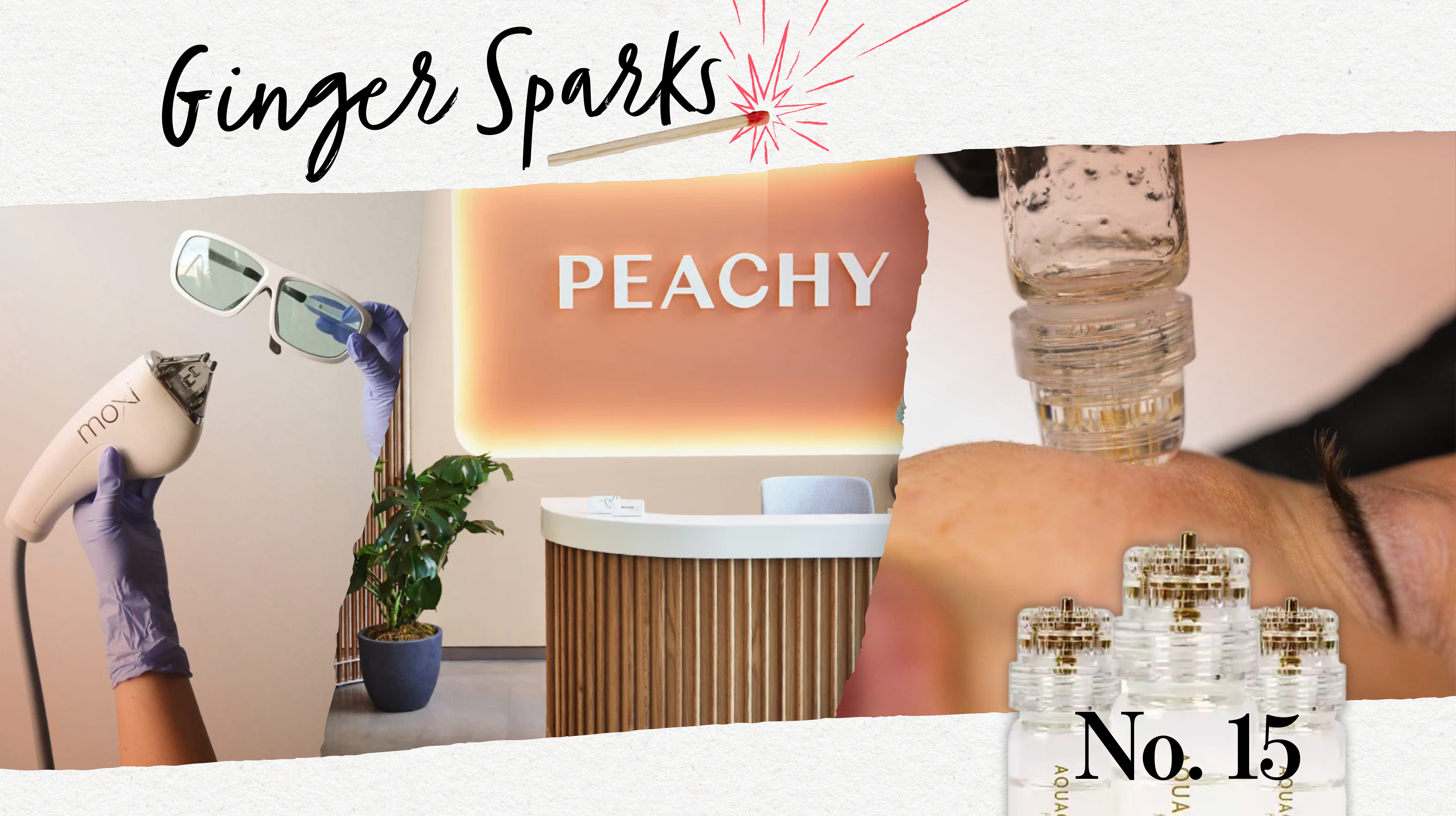
In What To Do With $2000, Continued, writer Marisa Meltzer’s Soft Power Substack asked readers what beauty procedures were actually worth spending money on. One commenter’s answer stopped us: “Aqua Gold. They stamp Botox into your skin. But not the muscle. So you just look like a beautiful egg, but it doesn’t stop movement.” That description sent us back to a treatment that has been quietly doing its job since launching in 2014 at the American Academy of Dermatology. The device uses 24-karat gold microneedles finer than a human hair to deposit a customized mix of ingredients directly into the dermal layer without affecting muscle movement. Plastic surgeon and Aquavit Chief Medical Technology Officer Dr. David Shafer describes the result as photo-finished skin quality, calling it a red-carpet secret for clearer skin and tighter pores, not a wrinkle solution. In 2025, Aquavit expanded the treatment to Europe, reaching a new market of aesthetic and dermatology practitioners.
Here is what actually interested us: the cocktail. As Dr. Elizabeth Roche, founder of Elizabeth Roche MD MedSpa in Bergen County, New Jersey, explains, providers can load the reservoir based on the patient: either basic hyaluronic serum or a combination of hyaluronic filler, Botox, and vitamin B12. Many patients book it a day or two before an event for the extra glow factor, though results last for two to three months, which is exactly the kind of low-commitment, high-specificity model that is rewriting patient expectations across the category.
GingerSpark: The Aqua Gold cocktail model is a signal about where aesthetic medicine is heading. Patients are arriving more informed, more specific, and less interested in dramatic intervention. The treatments winning right now are the ones that can be customized to a brief, booked before an event, and repeated without commitment. That is not a fad, but a new beauty-seeker’s standard.
Preventative Laser Is Not Just a Treatment... It Is a Gateway.
As we noted in Ginger Sparks No. 14, the treatment room is becoming the new product counter. BBL (BroadBand Light) HEROic™ and Moxi® Laser are the clearest proof of that. The combination pairs two mechanisms in one session: BBL (BroadBand Light) HEROic™ corrects pigment and tone, while Moxi® Laser works more deeply to boost collagen and prevent future signs of aging. But the more interesting story is not what happens in the clinic. It is what happens after people leave it!
Once someone has experienced professional laser results, their relationship with their bathroom shelf changes entirely. They have a new reference point for what their skin can actually do, and everything they buy afterward is in service of protecting and extending that investment. The treatment is not the destination. It is the beginning of a longer spending journey. SkinTok has accelerated that on-ramp fast, normalizing “Barbie Botox” and “trap tox” as casual vocabulary and now running thousands of BBL and Moxi recovery timelines and before-and-afters. The r/45PlusSkincare thread on BBL + Moxi alone has drawn hundreds of responses from people debating whether results justify the cost.
The brands paying attention are already moving. SkinCeuticals launched Advanced RGN-6 in May 2025, explicitly inspired by laser regeneration science and designed to be paired with in-office procedures. ALASTIN built an entire post-procedure line around the same occasion. Meanwhile, the gateway effect is pulling in consumers who want results without the clinic price. The global market for at-home laser beauty devices reached $537 million in 2024 and is projected to reach $1.3 billion by 2033.
GingerSpark: Every person who walks out of a clinic is a newly activated skincare consumer with higher expectations and a maintenance mindset that did not exist before they booked that first appointment. The brands that understand the treatment room as a gateway rather than a competitor are the ones positioned to capture what comes next!
Botox Was Always a Subscription. Peachy Just Proved It.
The Washington Post put it plainly this past July: Botox has shifted from niche luxury to routine maintenance. Sociologist Dana Berkowitz captured it simply: “It’s just become something people do, like when they get a manicure.” The US saw 9.8 million neuromodulator procedures in 2024, nearly double the number in 2019. The demand was never the problem. The experience was.
Peachy was built to solve that. Flat-rate pricing, board-certified nurse practitioners, and a patented AI that, as Dr. Carolyn Treasure explained to Forbes, maps approximately 600 facial data points to identify optimal injection points consistently across every provider and location. The patient returns every three months on autopilot because the experience is predictable enough that rebooking feels like renewing a prescription. That is the retention model the rest of the industry is still trying to reverse-engineer.
The most telling signal is Skin Laundry. A brand that built its identity around laser facials and previously stated it did not offer injectables now offers Botox and Xeomin. That is not a menu expansion. It is a brand responding to a consumer who has stopped thinking entirely in terms of category boundaries.
GingerSpark: The brands winning in aesthetic maintenance understood retention before acquisition and trust before upsell. The question every beauty brand should ask is: what does their version of the three-month appointment look like, and whether they have built the infrastructure to make it consistent enough that customers never think about going elsewhere.
