


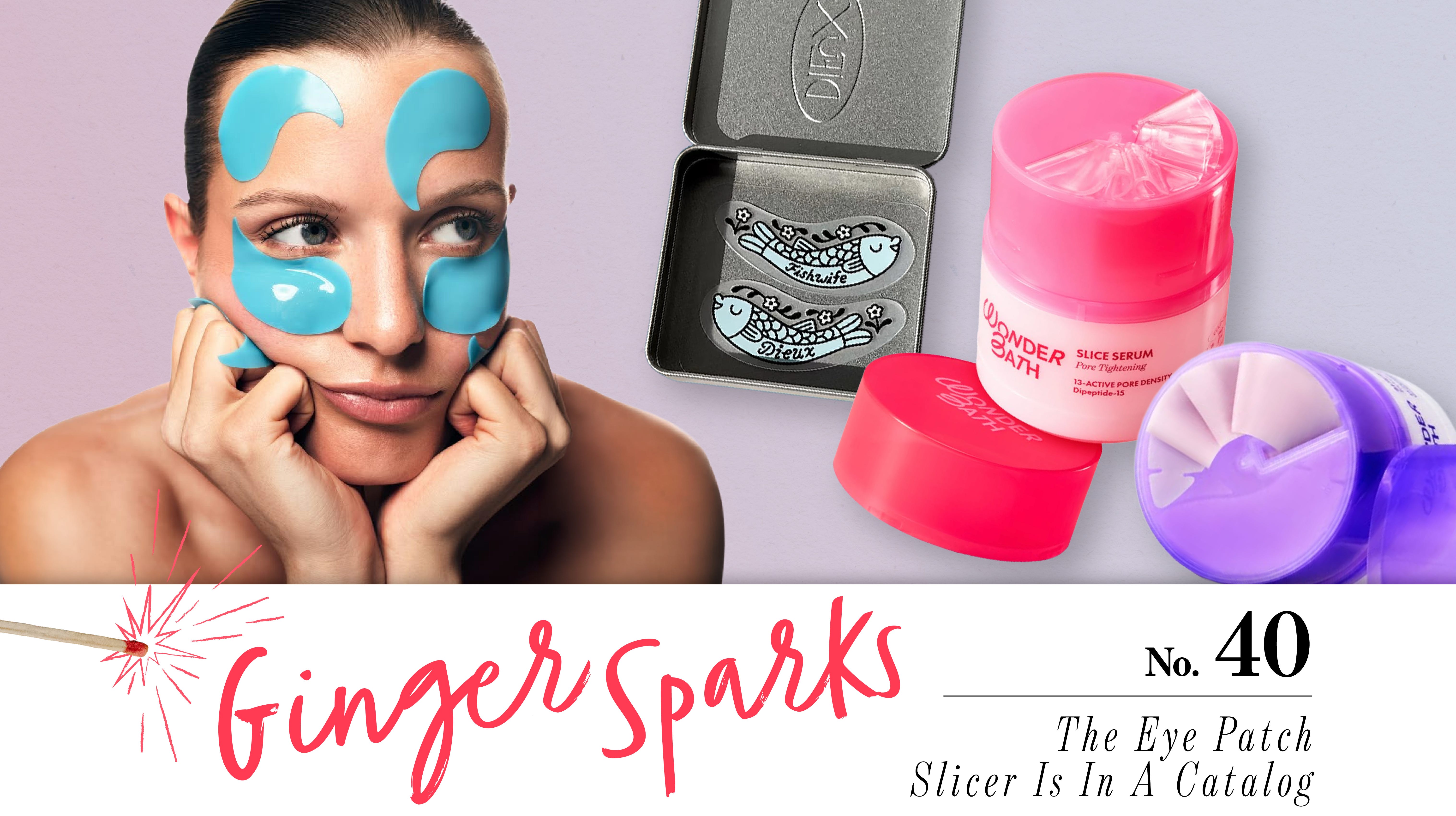
Beauty had a very specific week: four brands, one eye patch slicer, and plenty of finger-pointing on Instagram. The drama is fun, but the more interesting story is what's behind it. Below, we cover who really makes the slicer, what it gets right about dosing, and why the best patch of the week came in a tin of sardines.
Four Brands, Four Days
Fenty Skin kicked things off on September 17 with a teaser for its Dew N Plump Fresh-Sliced Hydrogel Eye Patches, a twist-up tube that slices off a fresh jelly patch each time, which Fenty called “first of its kind.” Three days later, The Lipstick Lesbians unboxed Glow Recipe’s version, in what looked like the same component. Huda Beauty’s showed up a day later, and then Vitamasques posted its own, saying it has been working on one since last November. Meanwhile, Korean brand Wonder Bath has had one on the market since July (not launched stateside yet, though, but available through YesStyle.com).
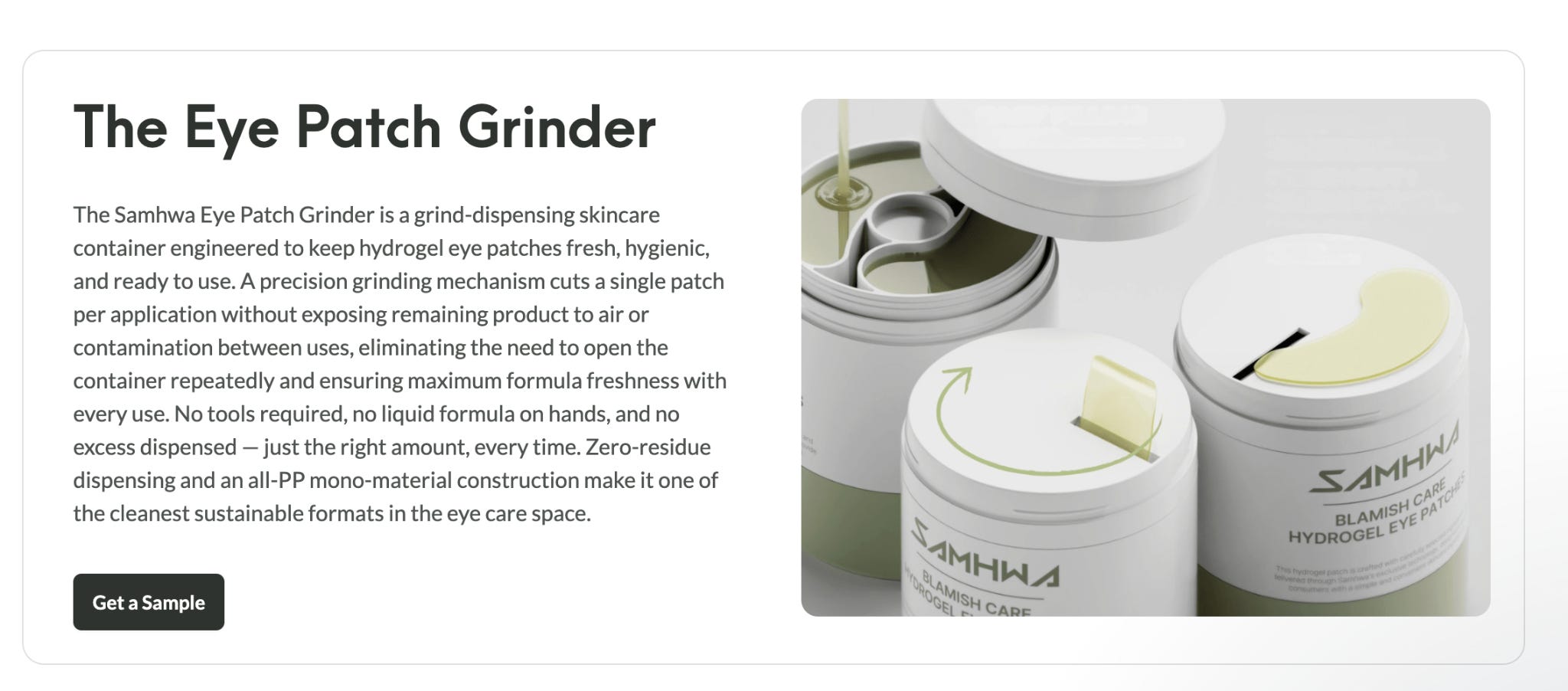
Can any of them claim they invented it? Not really. Marie Claire found the closest match for the hardware: a stock component from Samhwa, one of Korea’s big three packaging makers, which sells it from a catalog with a 5,000-unit minimum. Huda Kattan says the brands were lied to about exclusivity (and joked she’s scrapping the launch altogether, which sounds expensive!). Glow Recipe says everyone just fell for the same good idea. Fenty posted a Spider-Man meme, and our favorite commenter asked whether Nick Cannon manufactured the packaging. We laughed, like a lot! And now other brands are getting in on the joke. Amika and Bubble ( we can’t tell if they are joking or serious at this point) both posted “launches” of their own sliced patches. When a packaging format turns into a meme this fast, you know it’s already gone mainstream.
Ginger Spark: Being first used to mean you invented something. Now it mostly means your PR team hit send first. Suppliers show off their newest packaging at trade shows like MakeUp in New York, and every brand is walking those aisles. According to packaging expert Allison Kent-Gunn Garibay, Samhwa may not be the only source. She says at least two Korean manufacturers are offering this slicer, each claiming to have developed it. So four brands landing at once looks less like copying and more like the industry working exactly as it does. As she told BeautyMatter, “Consumers experience innovation very differently than the industry does.”
The real secret is: beauty is a big business, but it’s not that big… There are only so many packaging players with unique capabilities… and they all want to make money. When we were developing indie haircare, our turnkey manufacturer handled everything, from the lab and formulation to filling and packaging. It was a professional haircare business owned by a global beauty giant that also made products for other brands. The company across the aisle may well be filling your competitor’s bottles. When everyone shares the same factories and the same trade show aisles, a good idea doesn’t stay exclusive for long, and paying for exclusivity only buys you a head start.
The Gingergeist team knows firsthand how this works in beauty, fashion, and other cultural trends. These grievances are now being aired on social media rather than just in court (cue the Molly Sims grievance over Bobbi Brown’s “Wide Awake” nomenclature). As Diet Prada (or @EsteeLaundry) has called out copycats, zeitgeist and ideas are often interpreted nearly simultaneously by many. Quarter zips anyone?!
So who’s next to join in on the launches? According to shipping records Marie Claire found, the slicer has already shipped to Maybelline, YSL, L’Oréal, Innisfree, and Dr. Jart+, though none of them has announced a product yet. Our bet: once it hits the drugstore, nobody will remember who launched first. They’ll just wonder why eye patches ever came in a jar of goop. The slicer is headed where every good component eventually goes: everywhere.
The Dose Is The Point
Think about how eye patches have worked until now. You open a jar of goop and chase a slippery pair around with a tiny spoon (we’ve all been there). Every time you dig in, the rest of the patches get exposed to your fingers, air, and whatever else is on the counter. The slicer solves all that. One twist gives you one seemingly fresh slice from an airtight pack, and nothing else gets touched. It’s also far easier for anyone with limited grip or dexterity, a point the most-liked comment we found made better than any press release. Delivery of cleaner and easier-to-use formats is how formats win. Just ask the airless pump or the tube.
It’s also a dosing story, as our friend at LPK, who leads strategy and foresight, pointed out on LinkedIn. Beauty has been selling efficacy through single doses for decades, from Borghese’s Power-C capsules (a favorite of ours) to Elizabeth Arden’s ceramide capsules and Babor’s ampoules. The slicer brings that logic to the eye patch.
The fine print still needs work. A note tucked into Glow Recipe’s PR package to The Lipstick Lesbians read: “Ignore the first few slices.” When we buy a product, we don’t plan on throwing any of it away. There’s no window to show how much is left, either, and nobody has said how much of each thin slice is actually active. As Dr. Rachel Ho points out, hydrogels work primarily through occlusion, so what’s inside still matters.
Ginger Spark: We think the slicer is on its way to becoming the new normal. Glow Recipe’s Sarah Lee compared it to the cushion compact, and she has a point. Once a format solves a real problem, consumers stop seeing it as a novelty and start expecting it. Remember when cushion felt like a gimmicky gadget? Now it’s just how some of us wear foundation. When everyone’s using the same packaging, the formula is what sets a brand apart.
Capsules earned trust because you knew exactly what you were getting in each one. The slicer can do the same, but only if brands tell us: How much active is in each slice? If we’re supposed to ignore the first few, what exactly are we paying for? How many patches are really in there? And could someone please add a fill window? And look, we get it... It’s not REALLY a fresh slice; it’s the perception. The first brand to put those answers on the box and treat accessibility as a real benefit rather than an afterthought gets to own the format, no matter who launched first. Many higher-end and luxury brands have resorted to packaging the patches in individual packages (with slice-shaped plastic), which is great for travel but definitely not sustainable, or for those with adaptive needs. If the slicer can solve the dosing, be adaptive-friendly, and be more sustainable, it would be a solution-oriented innovation all around.
Meanwhile, The Sardines
Honestly, the eye patch news that made us happiest this week has no formula at all. Dieux teamed up with Fishwife on the Good Taste Forever Eye Mask. It’s Dieux’s reusable silicone patch, covered in blue sardines drawn by Fishwife illustrator Danny Miller. It’s $25 and comes in a tin that already looks like a can of fish. You bring your own serum, so you pick your own dose. Fishwife even bundled it with three tins of Sardines with Preserved Lemon, for omega-3s on the inside too. And Dieux co-founder Charlotte Palermino turned up in the comments of Wonder Bath’s post with a question: “Does the whole mask melt into your skin? Would love to know how much of the active leaves the mask.” A fair question, politely asked.
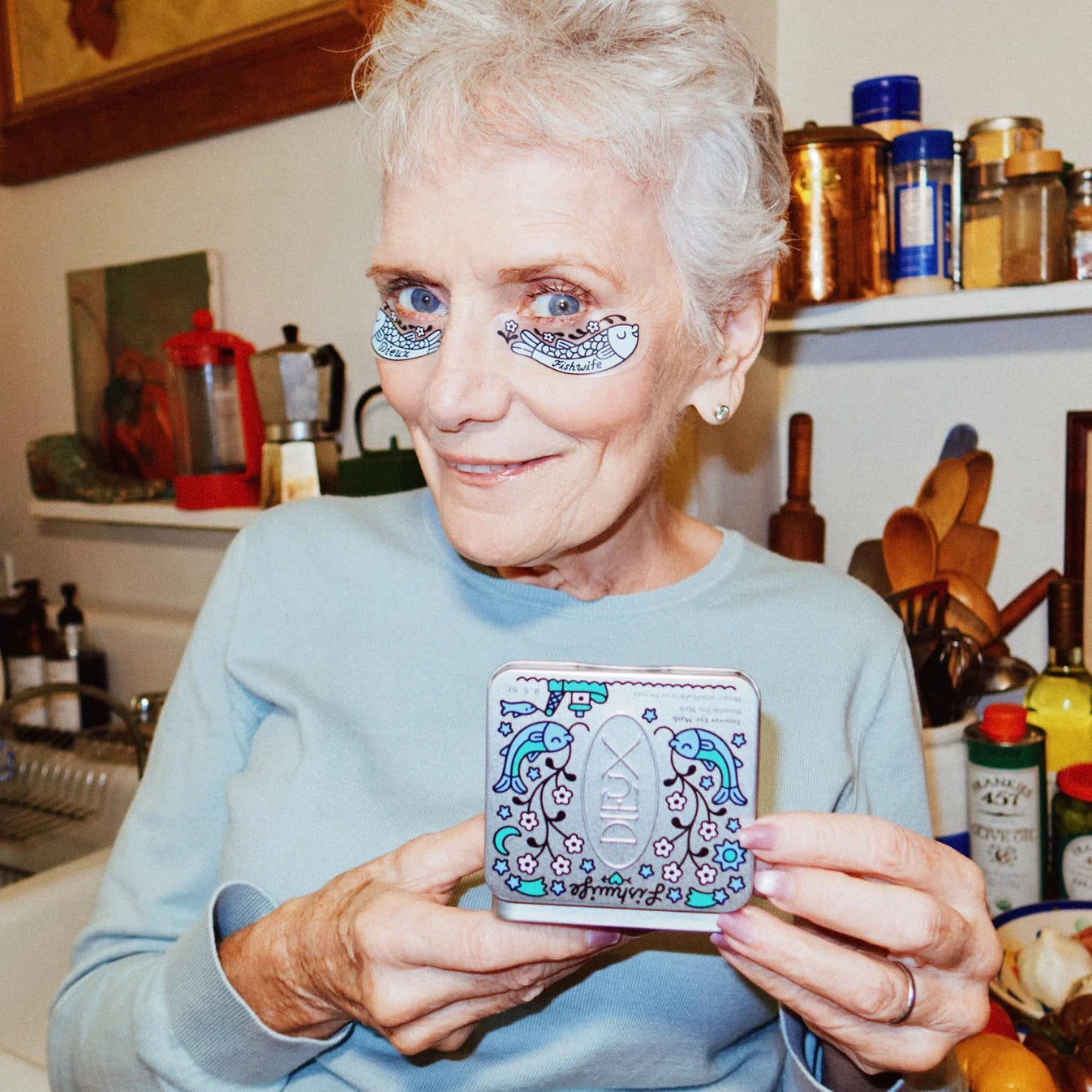
Ginger Spark: Reusable, personal, and in on the joke. While everyone else argued over who owned the slicer, two brands with a real point of view made something only they could make. Nobody can buy this one off a catalog. The tin, the illustration, and the sardines-for-your-skin wink only work because it’s Dieux and Fishwife. Fishwife’s co-founder tied it to shared values, linking Dieux’s commitment to reusability with Fishwife’s focus on ethical sourcing. That’s the kind of collab that feels earned rather than slapped on.
It’s also a reminder that a patch you keep forever is a very different proposition from a stack of slices you use up. Dieux has built a whole collectible world around one silicone shape, with past limited editions like its Eckhaus Latta collab, and fans line up for each new drop. And it lands right in the middle of beauty’s food moment, alongside launches like Gisou’s Cherry Chocolate Collection. More of this, please. Beauty could use a sense of humor, and we could use another excuse to open a tin of sardines.

Gingergeist helps brands spot what’s next and figure out what to do about it. Trend briefings, strategy, and content: gingergeisty@gmail.com. Follow us on Instagram and LinkedIn.
