


Let’s start with the advice that confirmed everything we already suspected. When Michelle was around 20, her fabulous professor (also a redhead) looked at her and delivered what can only be described as the most motivating skincare speech of all time: wear SPF every single day, and by the time you’re 40, you’ll be stealing everyone’s husbands. Now, Michelle was not particularly in the market for anyone’s husband, but the underlying promise was intoxicating. The idea that a single daily habit could keep you looking younger, more vibrant, and frankly more unreasonably good than the people around you who skipped it was all she needed to hear. She was already a devoted SPF user before that conversation, but she considered it the moment devotion became a full-blown commitment. It stopped being a skincare step and became a way of life she has never once questioned.
Jamie was already well ahead of this curve, and between the two of us, sunscreen is less a skincare product and more a shared personality trait that has never once required an explanation. We are both fair, we both travel constantly, and wherever we land, investigating the local SPF situation is always on the agenda. European pharmacies get a proper visit. Korean beauty stores are non-negotiable. We have absolutely texted friends heading to Japan with a specific shopping list and felt no shame about it whatsoever. Sunscreen goes in the suitcase before anything else, and that has never been up for debate. So when we say this category is having a moment, we mean it personally, and we have the cabinet space to prove it.
Sun care has evolved from seasonal protection to daily performance. Wearability and hybrid formats are competing directly with complexion products, and “sunification,” the merging of sun protection into skincare and makeup, is projected to grow at an 8.6% CAGR. The consumer got there before the industry did, and the search data makes that very clear.
From Seasonal to Non-Negotiable
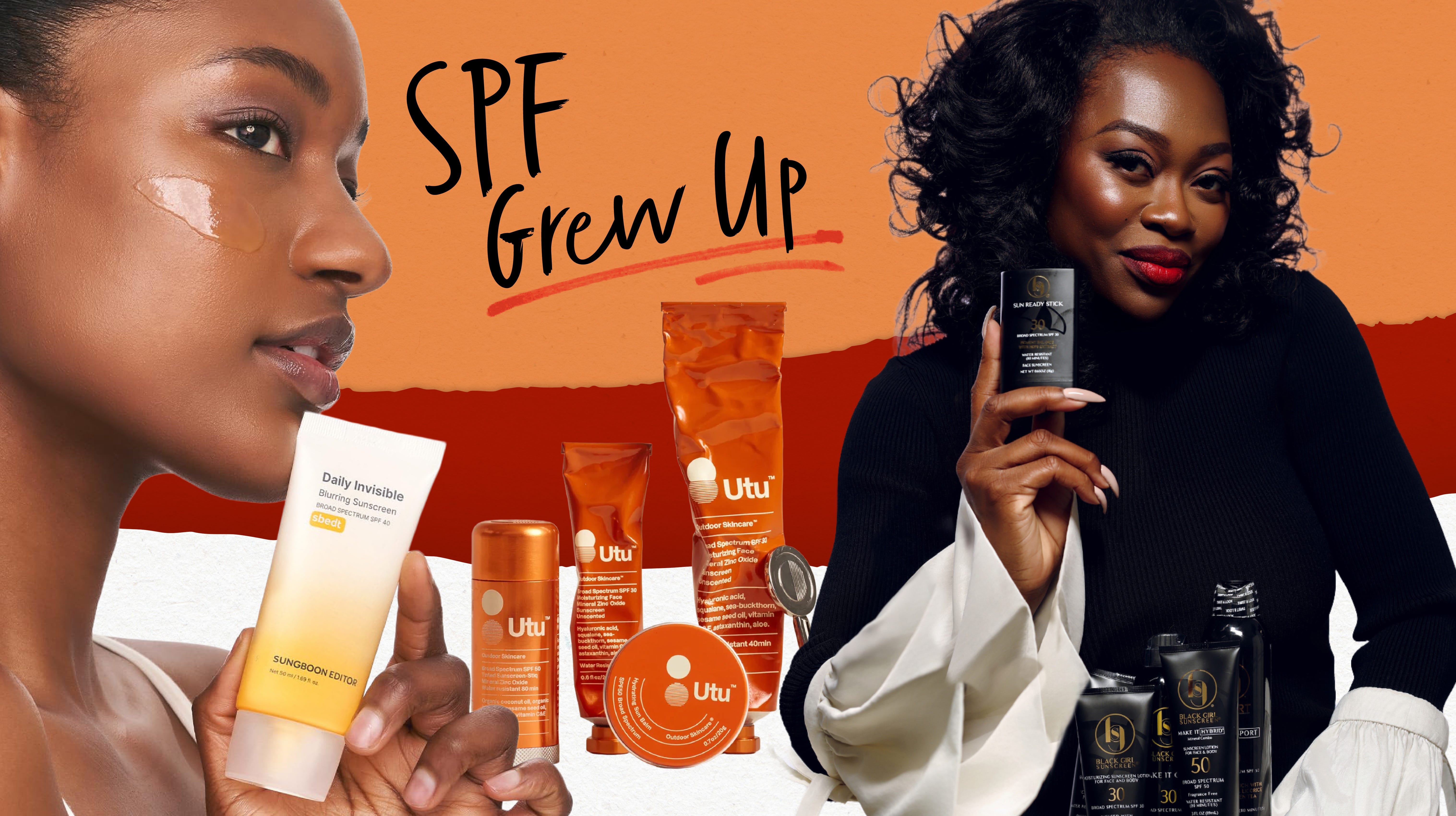
Business of Fashion recently highlighted how sunscreen branding has shifted from pool and beach to a performance-first mindset, including snow-sport promotions. Sun-care label Utu is a good example of how far the brief has traveled. During avalanche safety training, founder Richard Welch and his guide, Barbara Wanner, began developing a sunscreen with SPF 50 and occlusive skin-shielding properties. In 2024, the brand’s Hydrating Sun Balm was revealed, packaged in a thin aluminum disc specifically designed for snow athletes to fit in their jacket pockets. Suddenly, that’s not a sunscreen, it’s essential gear.
The Consumer Is Writing the Brief
Wearability now determines repeat purchases, and according to SPATE’s 2026 Sun Care & Tanning Landscape Report, social media has been driving the innovation agenda. Tinted sunscreen is up 23.9% YOY, with Reddit threads framing it as a full foundation replacement, especially among consumers managing rosacea and hyperpigmentation. Frustration around shade accuracy and formula performance dominates the conversation, revealing real gaps in undertone inclusivity and cosmetic elegance. Elta MD UV Clear Tinted Broad Spectrum SPF 46 and Fenty Beauty Hydra Vizor Tinted Broad Spectrum Mineral SPF 30 Sunscreen consistently receive high ratings, and Dr. Ron Robinson recommends Black Girl Sunscreen as a strong option for avoiding the white cast problem. Searches for “no white cast sunscreen” are up 83.7% YOY, and at that volume, it stops being a niche complaint and starts being a category gap that went unaddressed for too long.
Other formats are gaining serious traction across the board. Tanning water is up 75.3% YOY, beef tallow sunscreen up 409.1%, sunscreen cushions up 2,635.1%, matte sun sticks up 452.6%, and milk sunscreens up 849.5%. Reddit conversations reveal a strong demand for high-performing, mattifying formulas that withstand humidity and activity, with a clear unmet need for comfortable matte options that control oil without inducing dryness or irritation for sensitive skin. Milk sunscreens are meeting those who ask directly, as seen in Anessa Perfect UV Sunscreen Skincare Milk and Coast Southwest Inc.’s new Milky Sunscreen Serum, which Happi recently covered. South Korean Sungboon Editor Invisible Blurring Sunscreen is also gaining attention, and climate-adaptive formats like Banana Boat’s Sheer Sensitive SPF 50 round out the ongoing search for a formula that actually works for everyone.
The Sunless Side
The glow conversation does not stop at SPF. Cyklar’s Self-Tanning Milky Essence delivers a streak-free, natural-looking tan in two flexible shades while hydrating and softening skin with ceramides. Westmore Beauty’s reformulated Body Coverage Perfector adds waterproof, blendable coverage with a Blend & Blur Body Brush. These are not novelty products. They are doing the finishing work that sunscreen alone cannot: skin that looks as intentional as the rest of your routine.
Why It Matters
SPF has entered a hybrid era, with the category now spanning protection, credibility, and aesthetic performance. Dermatologist-backed, mineral, and sensitive-skin positioning builds trust, while glow, tint, shimmer, and finish drive discovery and social momentum. Consumers are no longer choosing between protection and aesthetics: format and sensory differentiation now deliver both in a single product. Wearability without greasy texture, pilling, white cast, and shade mismatch is now the baseline expectation. The brands figuring out how to deliver on all of it at once are the ones worth watching. That professor was right about one thing: we may not have stolen any husbands, but we have never once regretted the cabinet space we gained.
