


From formula to delivery, three clear shifts are reshaping skincare in 2026. We recently dove into packaging and reformulations. Now we’re looking at what’s driving change beyond the lab: clean claims losing credibility, devices entering the daily routine, and K-beauty doing what it does best, editing down to what actually works.
Clean Beauty’s Performance Problem
Sponsored by the New York Society of Cosmetic Chemists, SPATE recently presented “The Ingredients Shaping Beauty in 2026“ to a room full of people who actually read ingredient lists for a living. The headline finding: clean claims are losing their grip. What consumers want now is safety, performance, and proof. We have been saying this for a long time. Some of those natural formulas simply did not perform, and consumers noticed. We used to joke, “Give me my chemicals back,” but it wasn’t really a joke. It was frustration with the performance gap that the natural-first formulation sometimes created.
Part of what made that gap so hard to close was that no one could agree on what clean actually meant. Despite the category’s widespread popularity, “clean beauty” remains amorphous, with commonly used terms lacking a universal definition, creating a measurable gap between consumer expectations and brand practices, according to Happi. That ambiguity gave fear-based marketing room to grow. The backlash against clean beauty was really a backlash against specific practices: fear-based marketing, ingredient shaming with limited evidence, and misinformation spread without scientific grounding.
The industry has reached a breaking point on the claim itself. In a Beauty Independent survey of 34 brand founders and executives, fear-based positioning in clean beauty came up repeatedly as something consumers are actively moving past. The consensus across the room: proof is replacing fear as the real reason people buy, and “clean” without transparency and clinical backing no longer moves product.
SPATE’s Mathilde Riba also surfaced something we’ve been tracking for years: highly engineered actives like Volufiline™ and pantry-shelf staples like turmeric are growing in parallel. The lab and the larder are no longer competing. And in a tighter economy, value consistently beats clean positioning. Worth noting for anyone working in the space: NYSCC Suppliers’ Day at nyscc.org/suppliers-day remains one of the better rooms for seeing what’s actually coming in ingredients, formulations, and solutions.
GingerSpark: The marriage of performance and naturals was always where this needed to go. Consumers no longer choose between the lab and the plant. They want both, verified through rigorous testing, validated by credible agencies, and carried by retailers willing to stand behind what they sell. The label stopped being enough. The formula still has to work.

At-Home Skin Devices Are Changing the Skincare Routine
Skincare is no longer just about formulation, although we’re happy to report on those updates as well. Light therapy, microneedling, PEMF, vibration, and electrical therapies are moving into daily routines, appearing as professional services, at-home devices, and, increasingly, both. Facialist Jasmina Vico pairs high-quality copper peptides with photobiomodulation (LED therapy) specifically because the combination delivers more than either does alone. As she explains it, the light increases micropermeability, helping peptides penetrate more deeply while also reducing inflammation and supporting tissue repair. HigherDOSE’s Light-Activated Glow Serum ($69) makes that pairing accessible at home, with copper peptides, hyaluronic acid, and vegan collagen formulated specifically for use before an LED session to support cellular regeneration.
The device category itself keeps moving. At CES 2026, L’Oréal showcased rechargeable LED eye patches and an LED face mask that signal where coordinated skincare technology is heading. Worth knowing for anyone building a device-adjacent routine: retinols, AHAs, BHAs, heavy carrier oils, thick dimethicone, and artificial fragrances don’t play well with most newer therapies. What does: exosomes, growth factors, multi-molecular-weight hyaluronic acid, and niacinamide.
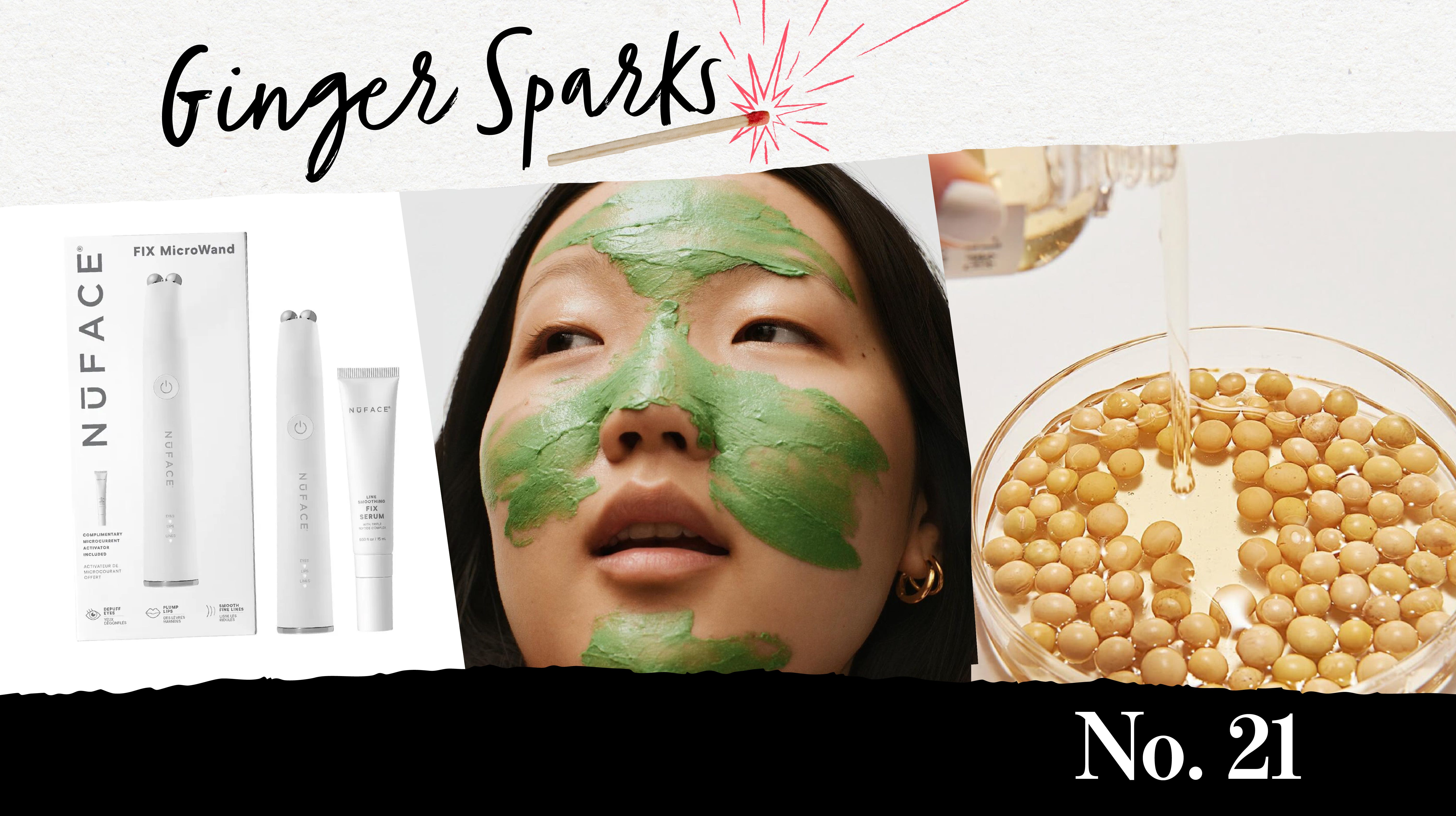
GingerSpark: Consumers have accepted technology as part of their skincare toolkit, creating a genuine white-space opportunity. The real business case isn’t just the device. It’s the bundled system around it, the serums, protocols, and formulas engineered to work with the tool rather than against it. NuFace and Shark are already moving in this direction. The brands that build device-and-formula ecosystems rather than standalone products are the ones worth watching.
K-Beauty 2026: Bean Creams, Fermented Actives, and the Move Toward Minimalist Skincare
K-beauty bean creams are a massive moment in 2026, and if you haven't encountered one yet, you will. The most viral standout is the Mixsoon Bean Cream, and it earned its following. Formulated with fermented soybean extracts that deep-hydrate, gently exfoliate, and strengthen the skin barrier, the texture is rich and velvety without the greasy finish that usually comes with it. It works as a daily moisturizer or a restorative sleeping mask, which is exactly the kind of quiet versatility that keeps something in rotation. The Bean’s Cabin High Moisturizing Fermented Bean Cream is also gaining traction, particularly for dry and maturing skin types. Driven by TikTok and the broader obsession with barrier-repair, both deliver the glass-skin finish consumers are after, celebrated for its glowing, non-greasy feel.
That last part is the real signal. K-beauty is moving away from filler-heavy formulas and toward targeted actives that actually do something. Fermented ingredients are leading that shift, with soybean extracts sometimes fermented in Centella asiatica for added barrier support. And bean cream isn’t the only story worth paying attention to. Yam extract is coming on strong as a plant-based alternative to snail mucin, offering a phytomucin option for consumers who want the hydration and soothing benefits without the animal-derived ingredient. The Isntree Yam Root line has already earned strong ratings across toners, vegan milk cleansers, and creams formulated specifically for sensitive, severely dehydrated skin.
GingerSpark: K-beauty has always been a step ahead on barrier health, but what’s shifting now is the editing process. Fewer fillers, more intentional actives, and a clear preference for fermented and nutrient-dense ingredients that work with the skin rather than layering on top of it. The minimalist, non-irritating routine isn’t a compromise. For this category, it’s the whole point.
