



Our lineage is confessional (It Happened to Me, Say Anything, “Confessions of…”), but our beat is the business of beauty and wellness: insiders, receipts, and what the industry gets right and wrong.
October is National Physical Therapy Month and Menopause Awareness Month, so we sat down with someone who treats the pelvic floor every day. We believe pelvic health is women's health in the most literal sense, and our conversation was so rich that we gave it two parts. Part One covers the body, from training and postpartum recovery to menopause. Part Two, landing next week, gets into the intimacy gummies now sold at Target and Sephora and the “vaginal rejuvenation” treatments showing up on med-spa menus.
The Insider
Dr. Loni Hersh, owner and founder of Peaceful Pelvis Physical Therapy, has spent twenty years as a physical therapist and opened her Rockland County practice in 2019. Patients find her from across the lower Hudson Valley and North Jersey, some pregnant or newly postpartum and others, men included, dealing with the bladder, bowel, and pelvic pain conditions nobody brings up at brunch. Her days go to everything the wellness feed scrolls past: C-section scars, diastasis recti, leaking mid-workout, and the pelvic shifts of perimenopause that no one mentions until they start happening to you.
The Interview
Tell us about yourself. What led you to specialize in pelvic health, and why call the practice “Peaceful Pelvis”?
I’ve been a physical therapist since 2005, and I knew pretty early in my career that I would eventually specialize in pelvic health. When I was in physical therapy school, I seriously considered changing paths to nursing so I could become a midwife. I was fascinated by women’s health and the process of pregnancy and birth, but I realized that the lifestyle of being on call and that level of unpredictability wasn’t the right fit for me.
Fortunately, I had an amazing mentor who helped me realize that I didn’t have to leave physical therapy to work in this specialty. I could approach women’s health through the lens of rehabilitation: helping people understand their bodies, recover from injury or childbirth, and regain strength and function.
The name Peaceful Pelvis came from what I see all the time in my work. When your pelvic health isn’t functioning the way it should, whether that’s your bladder, bowel function, sexual function, or something else, it can make life feel anything but peaceful. These are such fundamental and personal parts of our lives, and when something isn’t working well, it can affect how you move through your entire day. So yes, the goal is a “peaceful pelvis”, but really, it’s about helping people feel more comfortable, confident, and at home in their bodies.
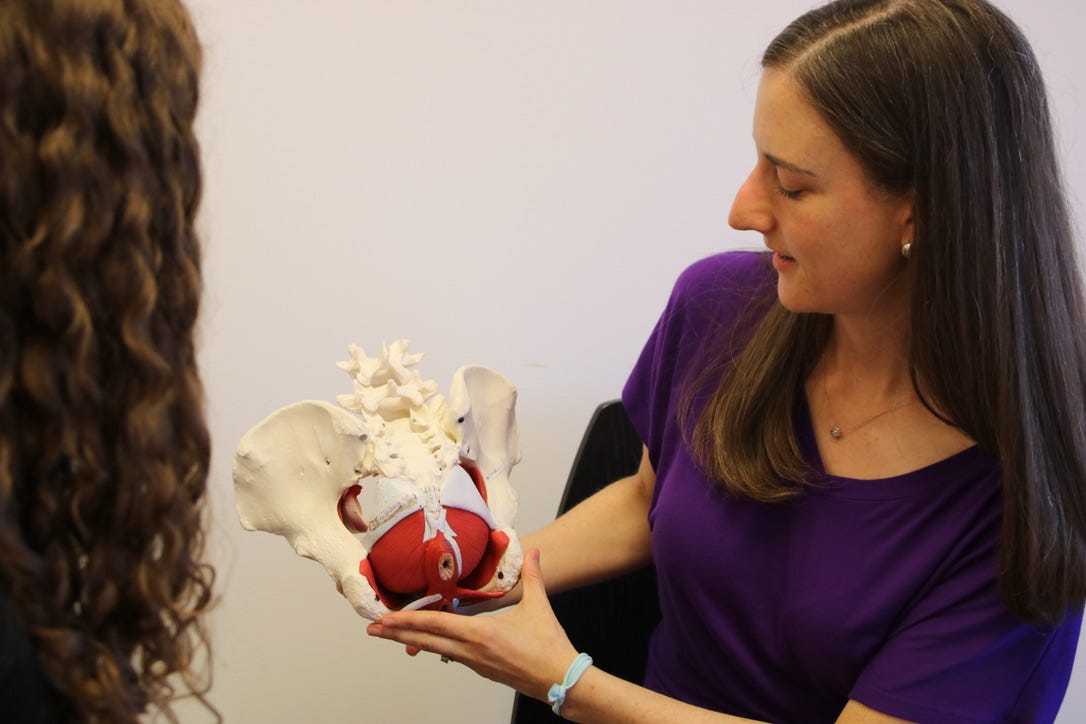
The pelvic floor is a muscle, just like a hamstring or a bicep. Why does it get treated like a mystery instead of something you can train, injure, and rehab like anything else?
The pelvic floor gets treated like a mystery because when we don’t talk about something openly, we don’t learn about it or normalize it. Unfortunately, there is still so much taboo around talking about the pelvis because its functions are incredibly intimate.
Anatomically, though, the pelvic floor isn’t fundamentally different from other muscles in the body. It can be weak, tight, overworked, poorly coordinated, injured, or simply not functioning optimally. Just as we can train and rehabilitate a hamstring, shoulder, or abdominal muscle, we can assess and rehabilitate the pelvic floor.
Because of the intimate nature of this body region, pelvic floor rehab requires a little more education and a lot more conversation to help people feel comfortable talking about these issues and addressing them when they arise.
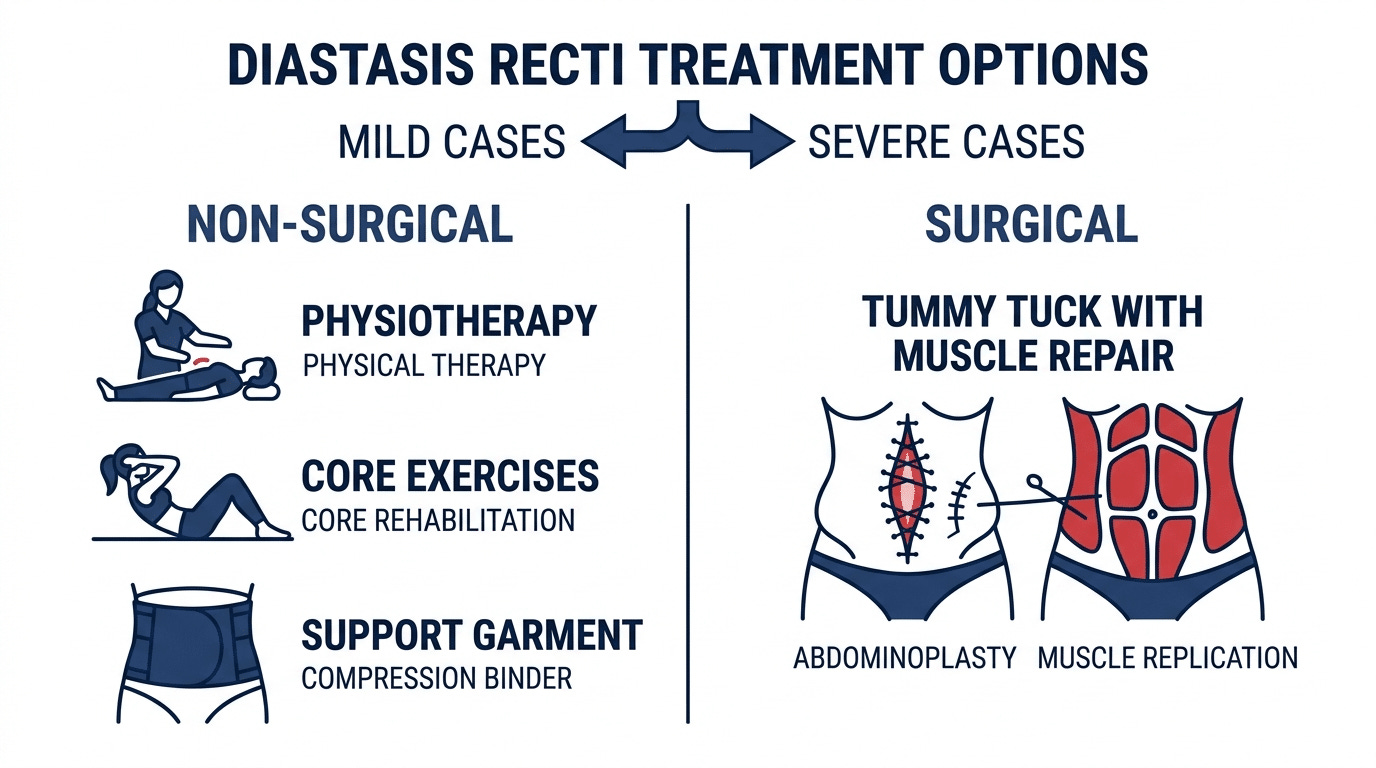
Diastasis recti gets thrown around a lot, but a lot of people don’t actually know what it is, or that mommy makeovers often bundle in surgical repair for it. Can you break down what it actually is, whether it can heal on its own, and when surgery genuinely makes sense versus when it gets oversold?
Diastasis recti, also called rectus diastasis, is a widening and thinning of the connective tissue between the two sides of the abdominal muscles, specifically the rectus or “six-pack” muscles. It’s extremely common postpartum because the abdominal wall must accommodate a growing baby during pregnancy. Once postpartum, always postpartum. If issues are not addressed, they can linger. But having a diastasis doesn’t automatically mean that something is wrong or that it needs to be “fixed.”
We have to look at more than just the size of the gap. We also need to consider the tension through the midline of the abdomen and, ultimately, how it affects function. For many people, physical therapy can help improve abdominal strength, coordination, pressure management, and overall function. Surgery can be beneficial in some cases, particularly when there is significant functional impairment or a hernia, but it shouldn’t be considered the default solution simply because someone has a diastasis. My goal when working with women isn’t to “close the gap.” It’s to help someone have an abdominal wall that functions well for the things they want to do.
Once postpartum, always postpartum.
Longevity culture has made “optimizing everything” the norm: biomarkers, hormone panels, supplements. Why has the pelvic floor been left out of that conversation until recently?
We’ve become very comfortable talking about optimizing almost every other aspect of our health, but the pelvic floor is still associated with very private and intimate functions, so it hasn’t been part of mainstream wellness conversations. But we’re working hard to change that!
How should someone actually be training and preparing their body, pelvic floor included, before pregnancy and after birth? What does that prep actually look like, versus the generic “just do your kegels” advice most people get?
Preparing for birth should be about much more than doing Kegels. In fact, it often doesn’t involve Kegels at all. Kegels increase tension in the pelvic floor, and for a vaginal birth, we need those muscles to be able to soften and relax.
Pelvic floor therapy during pregnancy can help a woman learn how to move in ways that support her changing body and use her core effectively, while also preparing the pelvis and pelvic floor for birth. That can include stretches and mobility work to help open the pelvis, perineal massage, learning to push effectively, and becoming familiar with different positions and options for labor and delivery.
The goal is to prepare the whole body, not just the pelvic floor. The more we understand about birth and the options available during labor and delivery, the more empowered we can feel.
Preparing for birth should be about much more than doing Kegels. In fact, it often doesn’t involve Kegels at all.
We keep hearing from women who go back to working out years after having kids and realize a lot of what they were struggling with was core-related all along. What’s your take on that delay, and why does it take so long to connect the dots?
People often think they can just go back to doing what they used to do, without taking into consideration how dramatically their body has changed through pregnancy and childbirth. It may not be until they start struggling that they realize something has changed.
They may notice leaking, pelvic pressure, back pain, abdominal weakness, or difficulty with certain exercises, but they don’t necessarily connect those symptoms to their core and pelvic floor.
I think there’s also an expectation that once you’re “cleared” postpartum, you should simply be able to return to your old routine. But being cleared doesn’t necessarily mean your body is fully prepared for the demands of running, lifting, jumping, or intense exercise. Sometimes it takes years for women to realize that they don’t just need to work harder; they need to learn how to work with their new body. A pelvic physical therapist can help with that.

Urinary leakage during workouts gets treated as a normal, even funny, side effect of fitness culture. Why does wellness culture normalize a symptom it would never tolerate anywhere else on the body?
Sometimes we tolerate or even laugh about things to make light of something uncomfortable. I think it goes back to how normalized pelvic health symptoms have become. We would never tell someone that it’s normal to have pain in their knee every time they run, or to routinely lose control of another bodily function during exercise.
Leaking during exercise is common, but that does not mean it is normal or something you have to accept. It’s often a sign that the pelvic floor and the rest of the core aren’t managing pressure and load as effectively as needed for that particular task.
Women shouldn’t have to stop exercising or simply put up with it. Pelvic rehab can help address the underlying issues and help women get back to doing the activities they enjoy without leaking.
We would never tell someone that it’s normal to have knee pain every time they run.
Most people never hear about pelvic health until something’s already wrong. What preventive habits should people actually be doing beforehand, and how far does pelvic floor dysfunction extend? What does it actually affect beyond the obvious?
Prevention starts with understanding that pelvic health is part of overall health, not something we should only think about when there’s a problem.
That means staying active, maintaining strength and mobility, learning to manage pressure and breathe properly during exercise, and understanding how to both contract and relax the pelvic floor.
Pelvic floor dysfunction goes far beyond urinary leakage. It can affect bowel and sexual function, pelvic pain, back and hip pain, exercise, sleep, and how comfortable and confident someone feels in their body. And more often than not, doing Kegels isn’t the answer. The pelvic floor needs to contract and relax effectively, and many people aren’t sure how to do that correctly.
There’s value in being evaluated by a pelvic PT even before you have a problem. When I’m teaching postpartum women how to coordinate their pelvic floor with their breathing and abdominal wall, people often say, “I don’t think I ever did it that way. Why didn’t anyone ever tell me this?”
“I don’t think I ever did it that way. Why didn’t anyone ever tell me this?”
C-section scars rarely get the same aesthetic or wellness attention as, say, a skincare routine. Why does a scar that affects real function get so much less cultural care than something purely cosmetic?
Once the baby is born, the focus shifts dramatically to the health and needs of the baby, and the mother’s recovery can get lost.
A C-section scar is often viewed as simply a superficial scar or a cosmetic concern, when in reality, a C-section is major abdominal surgery that affects multiple layers of tissue, from the skin and abdominal wall all the way down to the uterus. Even when the skin looks completely healed, the deeper tissues are still part of the story. Scar tissue can affect mobility, sensation, abdominal function, and how someone feels in their body.
I think we need to give mothers more attention and education about their own recovery, not just whether the scar looks healed, but whether the underlying tissues are healing and functioning well, too.
A C-section is major abdominal surgery that affects multiple layers of tissue.
Menopause is having its wellness moment right now: hormone therapy, longevity clinics, supplement lines. Where does pelvic health actually belong in that boom?
Pelvic health should be a central part of the menopause conversation, and I think that conversation should actually start in perimenopause, and even earlier. Perimenopause usually begins several years before the last period, often in a woman’s 40s. During this time, hormonal shifts can affect pelvic tissues, bladder function, and sexual comfort. We shouldn’t wait for symptoms to develop or for our periods to end before we start addressing these issues.
Taking care of our pelvic health throughout our lifespan is key. We can’t expect to start going to the gym for the first time in our 60s and get the best outcomes; the same is true for our pelvic health.
Finish the sentence: “In five years, wellness culture’s relationship to the pelvic floor will look like…
…the way people think about taking care of any other part of their body. I hope we’ll be able to talk about pelvic health openly, without taboo, and that when something isn’t working properly, people will know where to turn for help.


Part Two arrives next week and moves into sexual wellness, where Dr. Hersh sizes up the intimacy gummies and libido supplements now sharing shelf space at Target and Sephora and explains why "vaginal rejuvenation" on a med-spa menu, right between Botox and facials, makes her uneasy. If anything in Part One sounded familiar and you live in the Lower Hudson Valley and North Jersey, you can book with her at Peaceful Pelvis Physical Therapy.
Women now track sleep scores and hormone panels with real devotion, yet most of us never have anyone look at the pelvic floor until something goes wrong. When Dr. Hersh's patients ask why nobody ever taught them to coordinate their breath and core, that question points at the whole system of women's health care rather than at them. We'd love to hear what you wish someone had told you sooner about your own body.