
Got Milk? The Lactonic Beauty Wave Isn’t Slowing Down
Why Beauty Is Speaking in Milk Right Now!
In our longer report on Farm to Future: Animal-Based Practices Transform Beauty, Wellness & Fashion, we flagged milk-based beauty products and lactonic nomenclature as emerging cultural cues. At a sensory level, this “milk” language is less about literal dairy and more about lactonic texture, creamy, velvety accords that soften formulas, extend comfort, and create a skin-adjacent feel without tipping into overt gourmand sweetness.
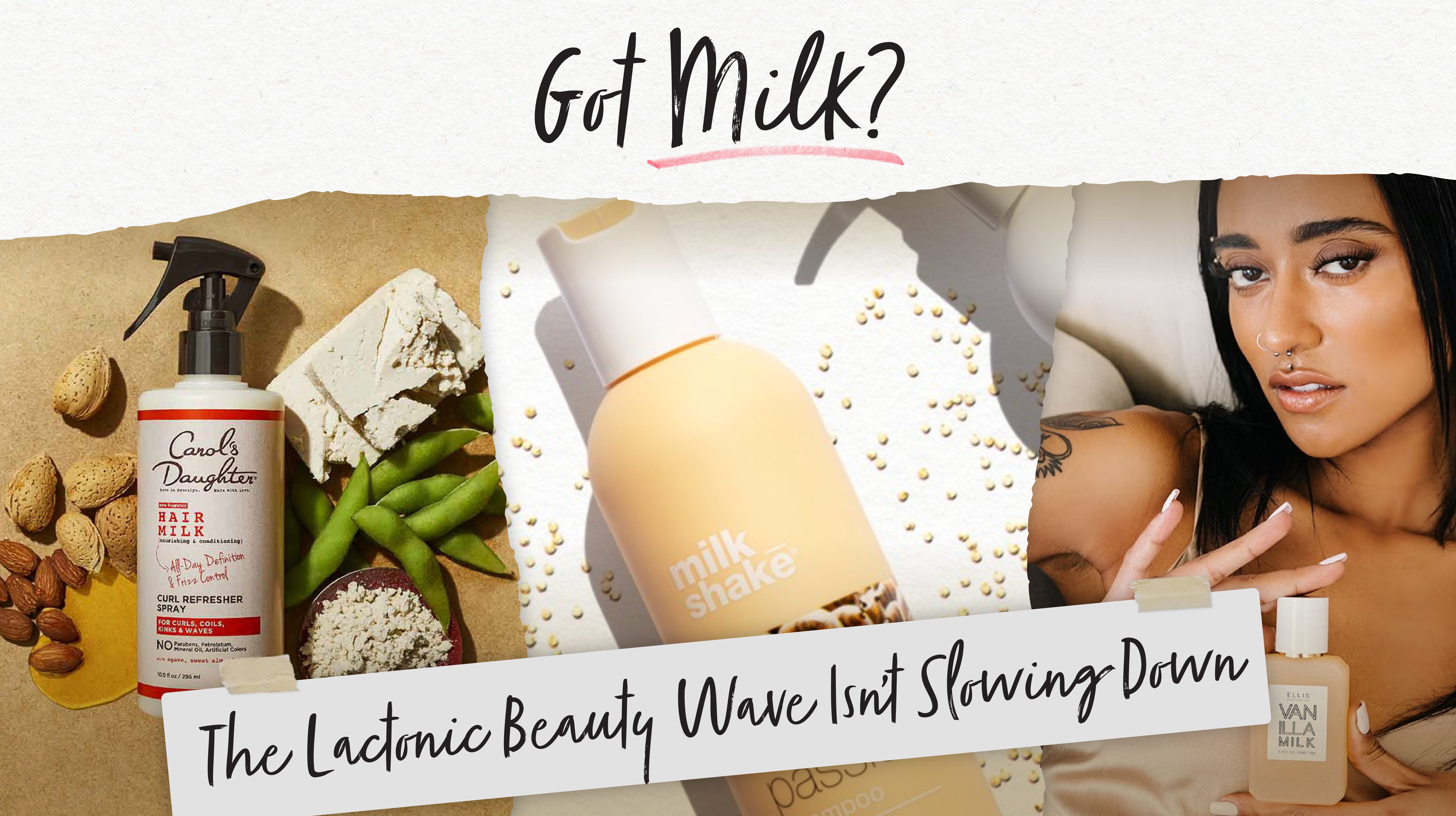
On a recent episode of TODAY with Jenna & Sheinelle, beauty expert Bobbie Thomas spotlighted the evolution of hair milks as trending hero products. She called out Carol’s Daughter’s Hair Milk as the original OG, and highlighted its Hair Milk Refresher Spray for lightweight revival of textured hair beyond its classic leave-in use. Mass-market players like Garnier’s new Repairing Milk Hair Honey Spray tout breakage prevention, up to 100 hours of anti-frizz, and 450°F heat protection for all hair types. At premium, heat-activated stylers like JVN Complete Blowout Styling Milk extend smoothness and style memory. And emerging indie buzz includes RŌZ Milk Hair Serum, marketed as a lightweight 3-in-1 hydration, frizz-free, heat-protect formula. At The Golden Globes, @mararoszak effortlessly prepped Emma Stone’s growing hair using the Milk Hair Serum! Most recently, REHAB. Your Hair’s Hair Milk has become a staple heat-protect spray/leave-in conditioner, earning features in outlets like OK! Magazine.
Notably, these products succeed because “milk” signals slip, nourishment, and softness, not sweetness: a functional parallel to how milky and lactonic notes are used in fragrance to round edges and enhance wearability rather than add sugar. This kinetic interest isn’t isolated. Outside the U.S., milk-based formulations and cues have long been mainstream in hair care, particularly in Europe. Italian professional haircare brand Z-One Concept’s Milk Shake line has built global followings around milk proteins and yogurt-inspired formulas.
Parallel to hair, the fragrance category is embracing lactonic aesthetics not just as scent narratives but as textural and emotional cues. Importantly, this movement has split into two distinct expressions: comfort-driven skin milks ( focused on softness, warmth, and wearability) and gourmand-leaning milk scents (which foreground sweetness and dessert associations).
The Head of Product Innovation for NOYZ recently debuted Only Human Mylk de Parfum on Instagram, positioning “milk” as a skin-conditioning effect rather than a flavor, closer to soft woods, musks, and gentle lactones than to traditional gourmand structures. In the global press last fall, Marie Claire pointedly asked, “Is It Just Me or Are Milk Perfumes Everywhere Right Now?” — referencing milk-centric launches like Commodity’s trio of Milk scents and The Nue Co. First Milk, which even incorporates actual almond milk for visual and conceptual milky appeal. While some launches lean overtly sweet, many of the most resonant “milk” fragrances sit closer to fabric, skin, and warmth, using milky cues to communicate intimacy, comfort, and emotional ease rather than edible appeal.
Indeed, this milk motif extends beyond hair and perfume, with milky skin care showing up everywhere from milky toners and cleansers (e.g., Rhode’s Glazing Milk, Laneige’s Cream Skin Toner) to body milks and lotions from mainstream brands. “Milky” has emerged as a cross-category shorthand for lightweight, barrier-supportive comfort, signaling creaminess and care without heaviness or excess. This isn’t some quirky niche either: milk and lactonic accords are showing up as a recognized perfume trend across editorial coverage, with fragrance editors naming lactonic and milk-inflected perfumes as a major sensory direction (e.g., Ellis Brooklyn Vanilla Milk, DedCool Milk and Mochi Milk, Commodity Milk).
This trend builds on our 2023 foresight work, “The Milky Way to Beauty,” which mapped the sensory, functional, and emotional roles of milky formulations. Today’s momentum underscores the versatility of lactonic accords in signaling care, intimacy, and texture across hair, skin, and scent without overt sweetness.
Why It Matters:
The rise of milky and lactonic cues reflects a broader shift in beauty from sharp cleanliness, overt sweetness, and high-contrast statements to softness, comfort, and emotional ease. As consumers gravitate toward products that feel nurturing, familiar, and wearable across different contexts, “milk” has become a versatile sensory shorthand for care without heaviness and indulgence without excess. Its ability to translate across hair, skin, and fragrance makes it especially powerful in a moment characterized by hybrid routines, skin-adjacent scents, and a desire for intimacy over intensity.


