
Ginger Sparks No. 7
First signals worth watching before they catch fire: from treatment rooms to top shelves!
This week, Ginger Spark focuses on ingredients as the signal. Actives once limited to clinical and pro use are moving into everyday routines, reshaping how consumers search, trust, and buy.
Plant-Based Exosomes Enter the Chat
Just two friends “hacking biotech.” That’s Polen Koçak-Denizci, PhD, and Merve Yildirim-Canpolat, PhD, the scientific duo behind SickScience. Both are trained in genetics and bioengineering, with research spanning stem cell production, regenerative medicine, and exosome applications in cancer treatment. As GLP-1–related rapid weight loss brings new skin concerns to the forefront, exosomes are entering the conversation. These nanosized messengers support cell-to-cell communication, helping skin receive and process biological signals. SickScience’s proprietary NX35™ 100 percent vegan, plant-derived exosomes are designed to mimic the body’s natural pathways. The goal is cellular regeneration, a stronger skin barrier, and long-term resilience.
The brand recently gained attention after being selected from hundreds of entries for NBC Today’s 2025 Mature Beauty Awards. ShapeShift, its neck-and-jaw-targeting treatment, stood out for its visible before-and-after results (Jamie can attest!). The line currently features just three products. ShapeShift, PowerCycle Scalp Treatment Serum, and DropOff Body Sculpting Serum. WWD reports the brand is set to debut at Ulta Beauty. While many brands are experimenting with animal-derived exosomes, SickScience is taking a different path. Ethical, plant-based signaling is not a trend decision. It’s a long-term one.
Why PDRN Is Everywhere
Ingredient-first discovery is reshaping how consumers search, scroll, and shop. Interest in PDRN is a clear example. Mintel and SPATE’s Popularity Index show demand up 998.4 percent year over year. Google logs roughly 1.6K monthly searches. Instagram has crossed 100 posts. TikTok averages more than 550K weekly views. The appetite is real, and it’s fueling rapid innovation around PDRN, or polydeoxyribonucleotide, a DNA fragment typically derived from salmon sperm.
Before it ever reaches a formula, PDRN goes through extensive purification. The process isolates refined DNA fragments, removing the original biological context. As New York–based board-certified dermatologist Dr. Anetta Reszko told Fashionista, the final ingredient is safe, stable, and functionally distinct from its source. Post-purification, PDRN is known for supporting skin healing and recovery, often described as regenerative. It’s especially relevant for stressed skin, including redness, barrier disruption, uneven texture, and collagen loss. Effective formulas rely on nano-encapsulation or other delivery systems to ensure penetration. Salmon DNA shares roughly 95 percent structural similarity with human DNA, which helps explain the ingredient’s compatibility and its ability to communicate with skin cells. We’ve been watching real-world adoption follow. Michelle has tried Rejuran Dual Effect Ampoule and is eyeing Venn Skincare’s Rejuvenative PDRN Ampoule Face Serum, recently reviewed by Marissa Meltzer on Soft Power.
Another shoutout to Ulta for its wide range of PDRN offerings, while Anua K-Beauty offers multiple options on its site. While dermatologists and doctors are wary of direct PDRN injections (which can lead to infections and complications), innovations in PDRN lip products and primers are ripe for development!
Glutathione Goes Topical
Long used in supplements and clinical settings, glutathione is gaining visibility in skincare as a gentler, antioxidant-led approach to radiance. Coverage in NewBeauty positions the ingredient as a way to support glow and even tone without relying on aggressive brightening actives. K-beauty has further helped reframe glutathione as a brightening antioxidant rather than a bleaching agent. In topical formulas, it helps reduce oxidative stress and support a more even-looking skin tone by influencing melanin pathways.
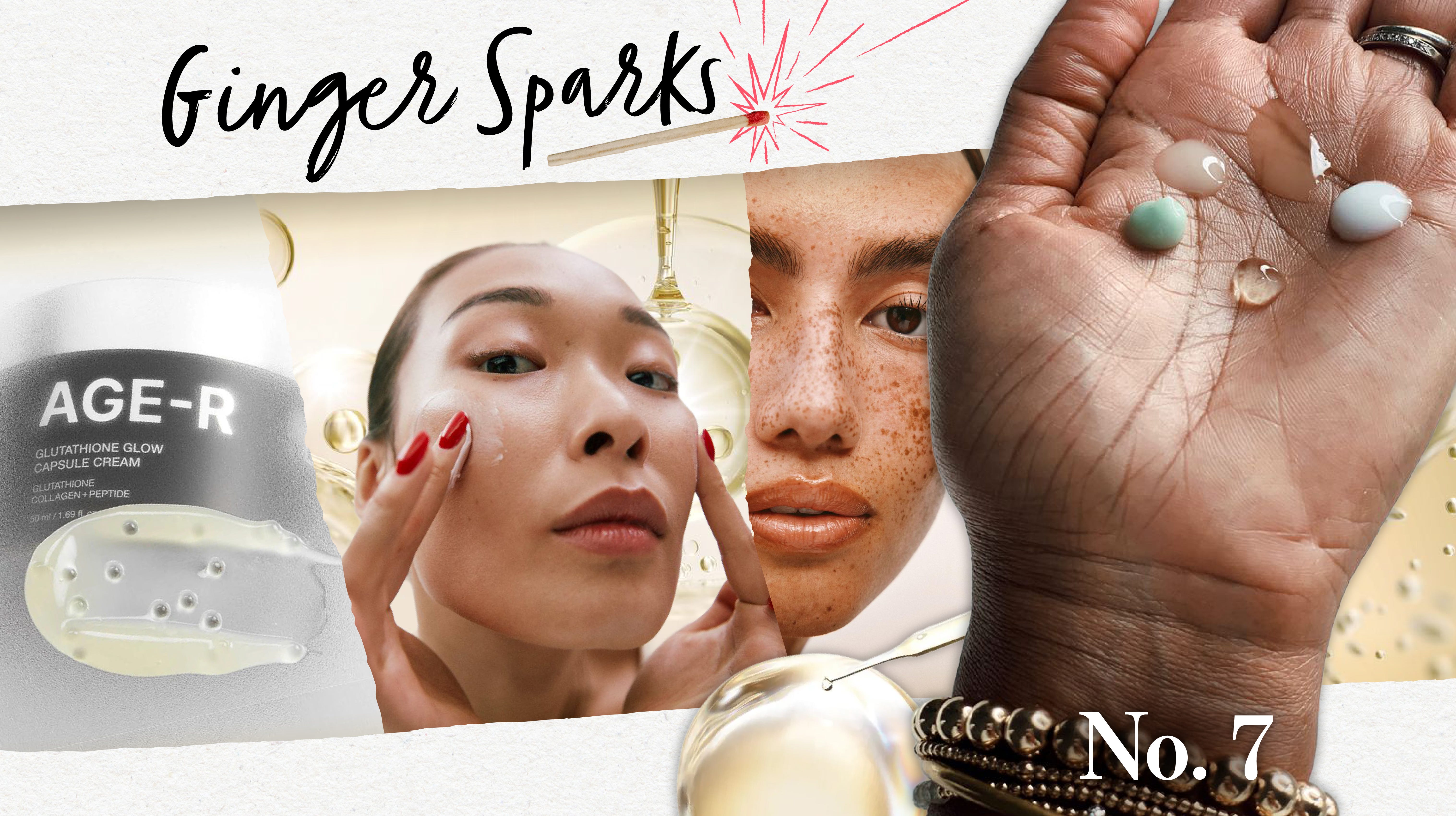
Industry coverage points to glutathione’s appeal beyond brightening alone. As a naturally occurring antioxidant, it supports skin defense against environmental stressors. This has increased interest from formulators looking to pair tone-correcting benefits with barrier and resilience claims. That shift is now visible in consumer-facing performance products like medicube Age-R Glutathione Glow Capsule Cream, signaling the ingredient’s move from niche and pro-adjacent use into daily skincare routines. We picked it up at Sukoshi in November, during our New York’s Radiance Reset post. The Canadian K-beauty retailer was recently reported by Business of Fashion to be planning aggressive U.S. expansion, a move also flagged by Linda Wells in her Look email for Air Mail last Friday.
New York's Radiance Reset
K-beauty and J-beauty aren’t trends; they’re philosophies. Over the past several years, they’ve reshaped how the world thinks about skincare: layering, hydration, prevention, and pleasure as design principles. What began in Seoul and Tokyo has evolved into a global system of care, now fully embedded in New York and beyond.


