Ginger Spark No. 02
First signals worth watching before they catch fire: claws, coffee, and the cult of data.
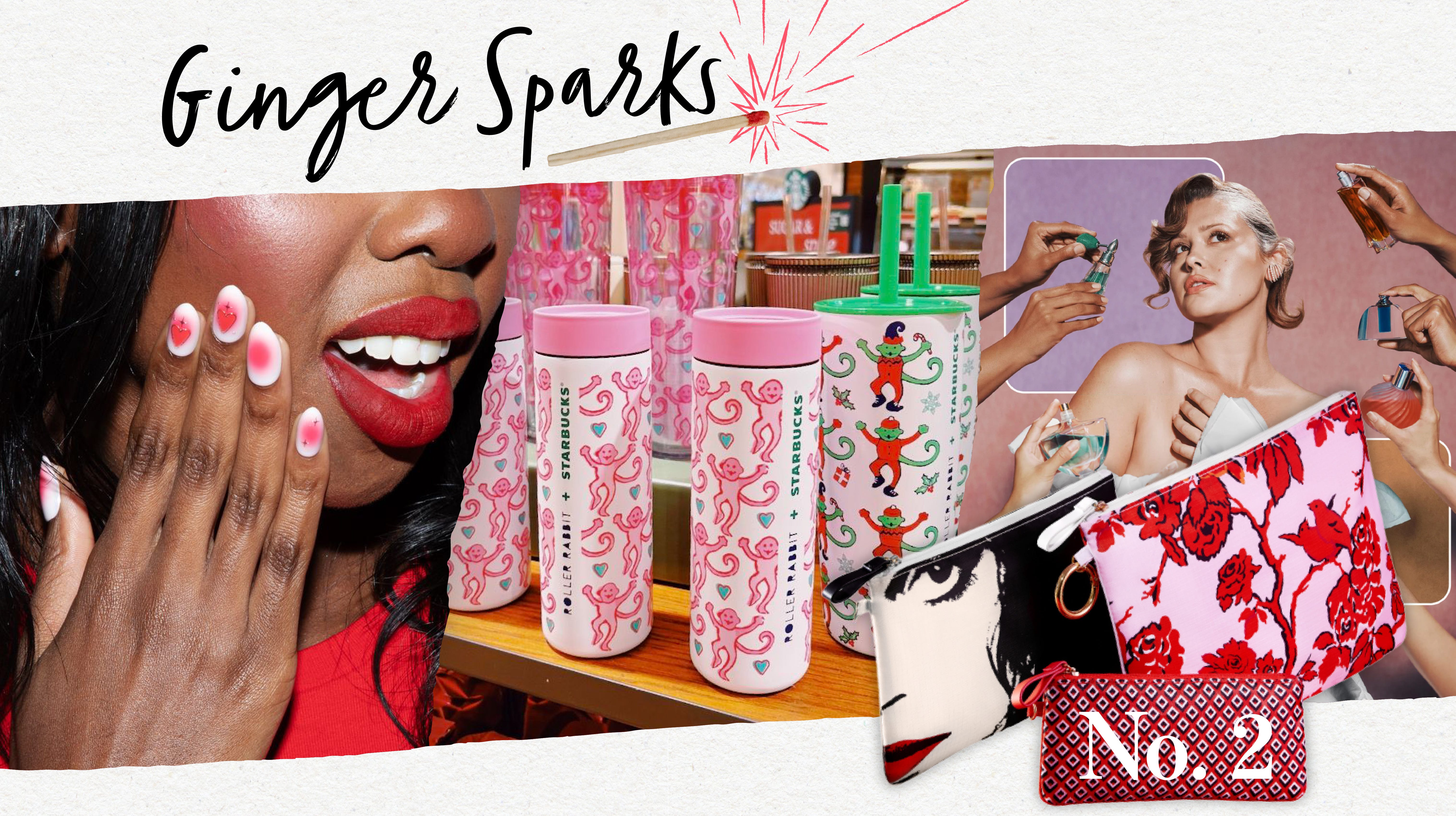
Pretty Little Claws
Recent Business of Fashion coverage has begun to spotlight press-on nails as an early entry point into beauty for Gen Alpha. This signal aligns with what we are seeing at the behavior level. For this cohort, beauty often starts with nails, not complexion. Nails offer a low-commitment, highly visible way to experiment with color, creativity, and identity without the permanence of traditional routines. Press-ons accelerate this shift by making nail application fast, flexible, and repeatable. They turn nail play into an everyday habit, with looks changing by mood, social context, or community.
In this context, nails function more like accessories than treatments. The category momentum supports the signal. The global nails market reached nearly $13 billion in 2025, with China driving scale and Japan leading innovation. Brands including Olive & June, Sally Hansen, Chillhouse, Kiss Cosmetics, and Glamnetic are already building youth-focused press-on offerings, pointing to where early experimentation and brand affinity are beginning to form.
Starbucks Was Always an Accessory
Starbucks’ move to hire a dedicated executive for fashion and beauty collaborations, as reported by Modern Retail, formalizes a cultural norm that has been in motion for years. Neiv Toledano, a former senior marketing manager at E.L.F., filled the role. Cosmetics, signaling how directly Starbucks is now borrowing from beauty’s collaboration and cultural playbook. Long before this title existed, the brand functioned as a visual and social signal, well beyond coffee.
Fashion partnerships are not new for Starbucks. Collaborations with designers such as Diane von Furstenberg, Vera Wang, Brandon Blackwood, Farm Rio, and Zac Posen at New York Fashion Week signal a clear shift from limited, regional drops to globally visible cultural moments. What has changed is the intent. Collaboration, collectability, and visual language are now core strategies.
That shift was visible long before it showed up in an org chart. As a high school fashion editor, Michelle once ran a column called What’s Up With That? Starbucks Stylish Among Students, wondering why nearly every teenager seemed to carry the same green-logo cup each morning. Turns out, some accessories just come with caffeine!
When Platforms Become Prophets?
Trend reports are no longer owned by forecasting firms alone. Platforms with scale and real-time data, from Depop and Stitch Fix to Amazon, Pinterest, and resale players like Rebag, are increasingly publishing their own cultural readouts. With access to search behavior, saves, sell-through, and resale velocity, these companies can spot shifts early and package them as insight. Pinterest’s annual Pinterest Predicts has become a clear example, turning search intent into forward-looking cultural signals before they hit the mainstream.
Resale makes this shift especially visible. Rebag’s 2025 Clair Report uses secondhand data to forecast long-term luxury value, turning marketplace behavior into a predictive narrative. Depop’s 2026 Fashion Trends Report was later covered and analyzed by WWD, underscoring how platform data is increasingly treated as an industry signal rather than internal insight. Post-holiday resale has also become a reliable seasonal signal, with January consistently marking peak intake as consumers convert excess into cash. As Sarah Shapiro of Puck recently reported, Fashionphile saw a 9 percent year-over-year increase in offers during Q4, with January remaining its largest intake month on record.
That momentum has pulled in institutional validation. BCG’s recent secondhand analysis, developed in partnership with Vestiaire Collective, positions resale performance as an indicator of brand durability and long-term desirability, not just a secondary channel. The partnership itself is the signal. Platform data, consulting insight, and market narrative are now tightly coupled, raising the question of where observation ends and influence begins.
Is all of this true? Possibly. Platform data is powerful, but yesterday’s numbers don’t automatically predict tomorrow’s desire. Data can surface the signal, but it can’t supply the soul. Real foresight still needs cultural context, intuition, and heart, not just algorithms!