
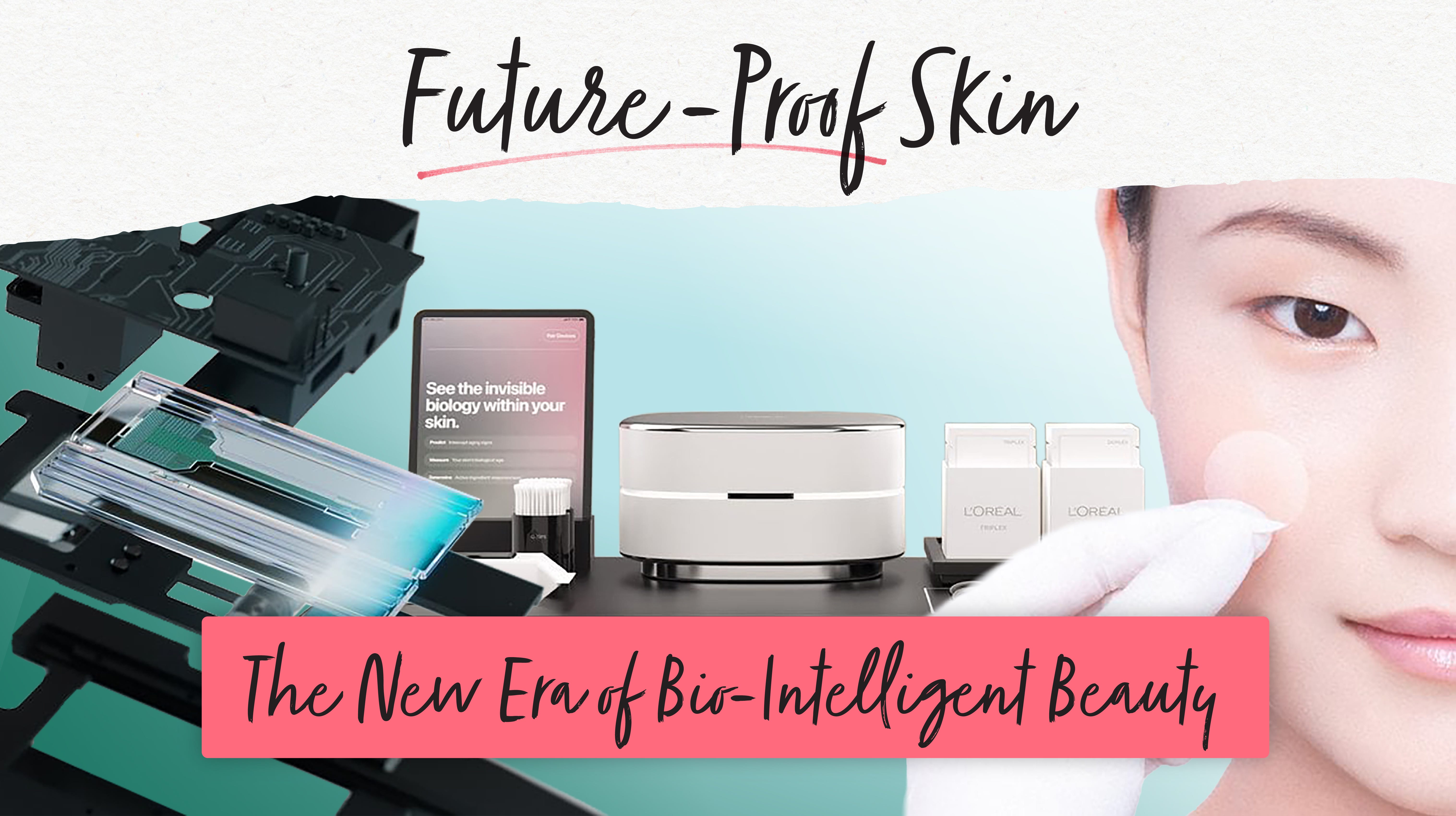
Future-Proof Skin: The New Era of Bio-Intelligent Beauty
How hyper-personalized diagnostics, longevity science, and at-home protocols are reshaping skincare for 2026 and beyond.
As we near the onset of 2026, the beauty world is undergoing a significant transformation in skin solutions. Innovations in aesthetic consciousness, AI-powered diagnostics, and regenerative medicine are reshaping expectations. At the same time, demand for minimally invasive treatments continues to rise, accelerating a new era of highly effective, personalized, and convenient at-home options.
Always at the forefront of consumer-facing innovation and now increasingly tuned to the rise of “patsumers,” L’Oréal is accelerating its investments in next-generation skincare protocols. At last year’s CES, the company introduced L’Oréal Cell BioPrint, a major step forward in consumer skin intelligence grounded in longevity science.
Through an exclusive partnership with Korean biotech startup NanoEnTek, L’Oréal Cell BioPrint analyzes individual skin biomarkers that reflect both current skin health and long-term resilience. The device uses NanoEnTek’s patented microfluidic lab-on-a-chip technology, which is based on more than 100 patents and can detect L’Oréal’s protein biomarkers in just five minutes.
The user experience is intentionally non-invasive and straightforward. A tape strip is applied to the cheek and placed into a buffer solution. The solution is loaded into a Cell BioPrint cartridge and inserted into the device for analysis. While the sample processes, the Skin Connect tool captures facial images and guides the user through a brief questionnaire focused on skin concerns and aging.
Why It Matters:
As anticipation builds for L’Oréal’s next breakthroughs at the 2026 CES Show, Cell BioPrint directly addresses one of the most significant unmet needs in the beauty category: hyper-personalization that is rooted in measurable biology rather than trial and error. According to L’Oréal, based on a study conducted with OnePoll and Cerave, nearly 80 percent of U.S. skincare users still experiment with multiple products before finding something that works. This cycle wastes time and money and erodes trust in the category.
Skin holds a uniquely individual data story. Unlocking ingredient-level recommendations, including guidance on longevity-focused actives such as retinol, requires precision diagnostics that consumers can rely on. Cell BioPrint represents a shift from guessing to grounded, science-first beauty. It decodes what the skin actually needs and builds optimized routines rather than improvised ones.


