


Fair warning: this one runs long, four countries and two weeks’ worth of it, so we recommend reading it in the Substack app for the full experience. The sixteen things we actually brought home are waiting at the end if you want to skip ahead.
In This Post
Copenhagen: The Mythology of Shopping
Riga: A City Worth Rediscovering
Tallinn: Unicorn Horn Then, Sea Buckthorn Now
Helsinki: The City of Near-Misses (and One Very Good Sauna)
What Actually Came Home
Shopping plans were made long before we boarded the plane. To celebrate our mom’s milestone birthday, Aliza and I spent two weeks traveling through Copenhagen, Riga, Tallinn, and Helsinki, with months of Pinterest boards, Instagram saves, Substack recommendations, Google Maps pins, and notes from friends behind us. Yes, we actually do commit to all this research. We had lists for vintage shops, design stores, cafés, museums, pharmacies, and the kinds of places you only find because someone insisted you go.
The weather had other plans, and so, it turned out, did everything else. Four countries, and the pattern held every time: whatever we’d researched the hardest rarely became what we actually remembered. A building surprised us in one city, a synagogue in another, and once, admittedly, it really was just a bag. That’s the story of this trip, the gap between what we researched and what actually surprised us, more than the places themselves.
This was also the June that had southern Europe under heat warnings. We knew we were headed somewhere cooler by definition, but what we got ran colder and wetter than a typical Nordic and Baltic June. We packed sweaters into our day bags, carried umbrellas almost everywhere, and reached for rain jackets more than sunscreen. It felt like the most autumnal summer we could have asked for, even if we didn’t know we were asking.
Copenhagen: The Mythology of Shopping
If you work in fashion, Copenhagen occupies an almost mythical place in the imagination. Scandinavian style has shaped everything from contemporary minimalism to street style, and everyone seems to have a favorite vintage shop, café, or design destination to recommend. There are no direct flights from New York to Riga, which meant picking an entry point, and Copenhagen had been on my list for years regardless. Of all the cities on our itinerary, this was the one I had researched the most, which made it the first place the gap showed up. We arrived expecting to shop and discover Scandi treasures.
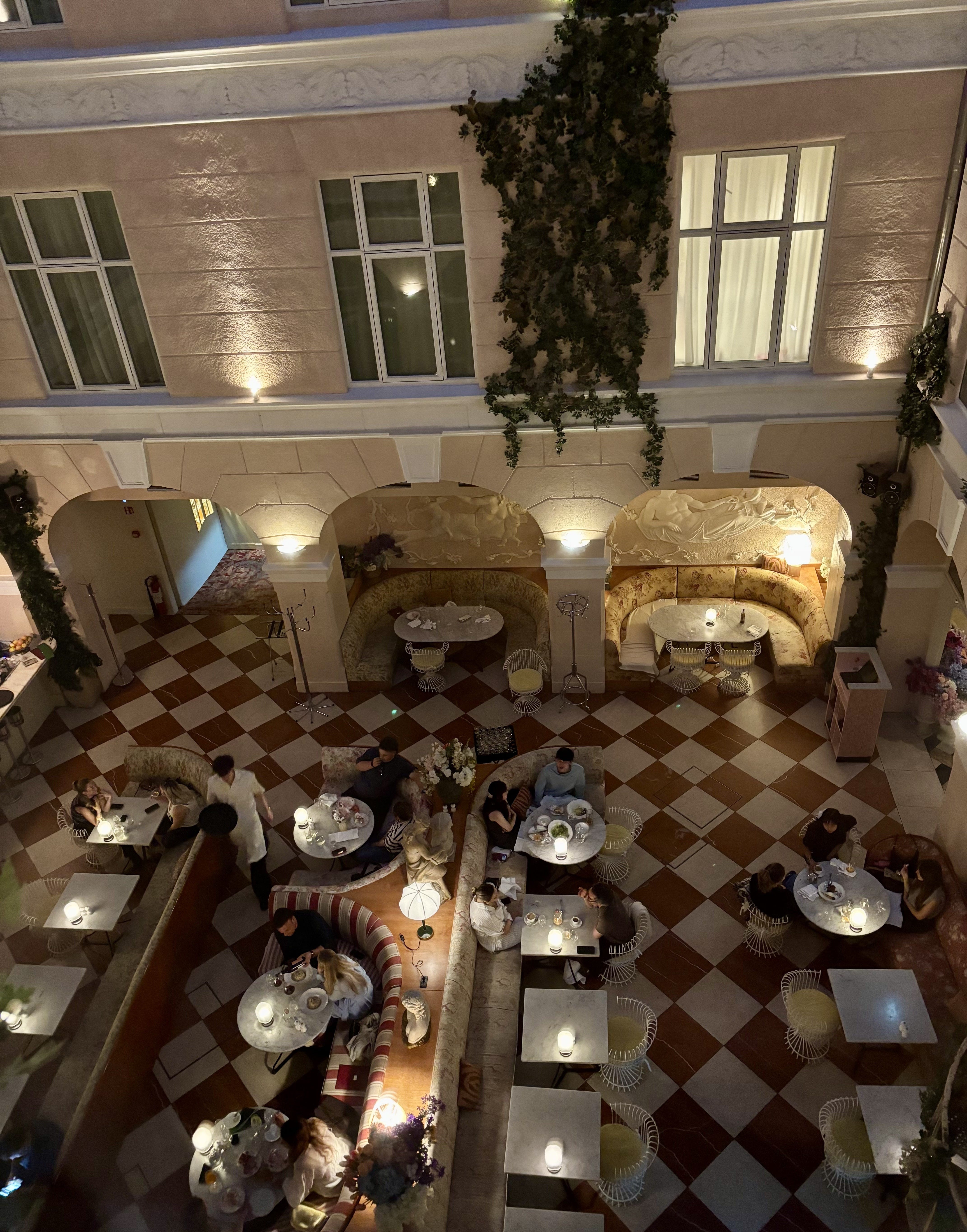
We stayed at Hotel Bella Grande, an 1899 building near City Hall Square with a candy-striped courtyard that feels more Bologna than Copenhagen. The hotel’s own restaurant, Donna, turned out to be one of the better meals of the trip, an Italian spot in red and pink tones with its own cocktail lounge tucked into the same courtyard. It was an easy, no-thinking-required dinner after a day of walking, and worth booking ahead since it’s popular with locals too.
We spent our first evening on the arc every Copenhagen guide points you toward, and for good reason. Nyhavn’s row of colorful townhouses along the canal is worth the crowds, especially with a drink in hand as the light stretched on into the evening. From there we walked north to see the Little Mermaid perched on her rocks, then back through Amalienborg Palace, home to the Danish royal family, before looping back toward the hotel. The next morning we did a Jewish Copenhagen heritage walking tour, starting at the Central Library on Krystalgade and ending at the Copenhagen Synagogue. It gave us more context on the city than any of the shopping did, and easily became one of the highlights of the whole stop.
From there, the designer and vintage crawl started. Another nué, O-S-V Secondhand, and Time’s Up Vintage all sit within the same block on Krystalgade and Peder Hvitfeldts Stræde, so we worked through them one after another. I’d had Another nué saved on Instagram for months, so it was satisfying to finally see it in person. I loved Cecilie Bahnsen’s CB Vilde T-shirt in Light Pink but decided to save it for another time. We also spent a while admiring Cala Jade’s Misu L shoulder bag and kept coming back to Yuzefi’s XL Mochi in embossed Sierra leather, though neither came home with us. Later that day we made it out to Jerome Vintage on the other side of town after seeing it recommended by Vogue Scandinavia. It was beautifully edited, almost gallery-like, but so tightly curated there wasn’t much to sift through.


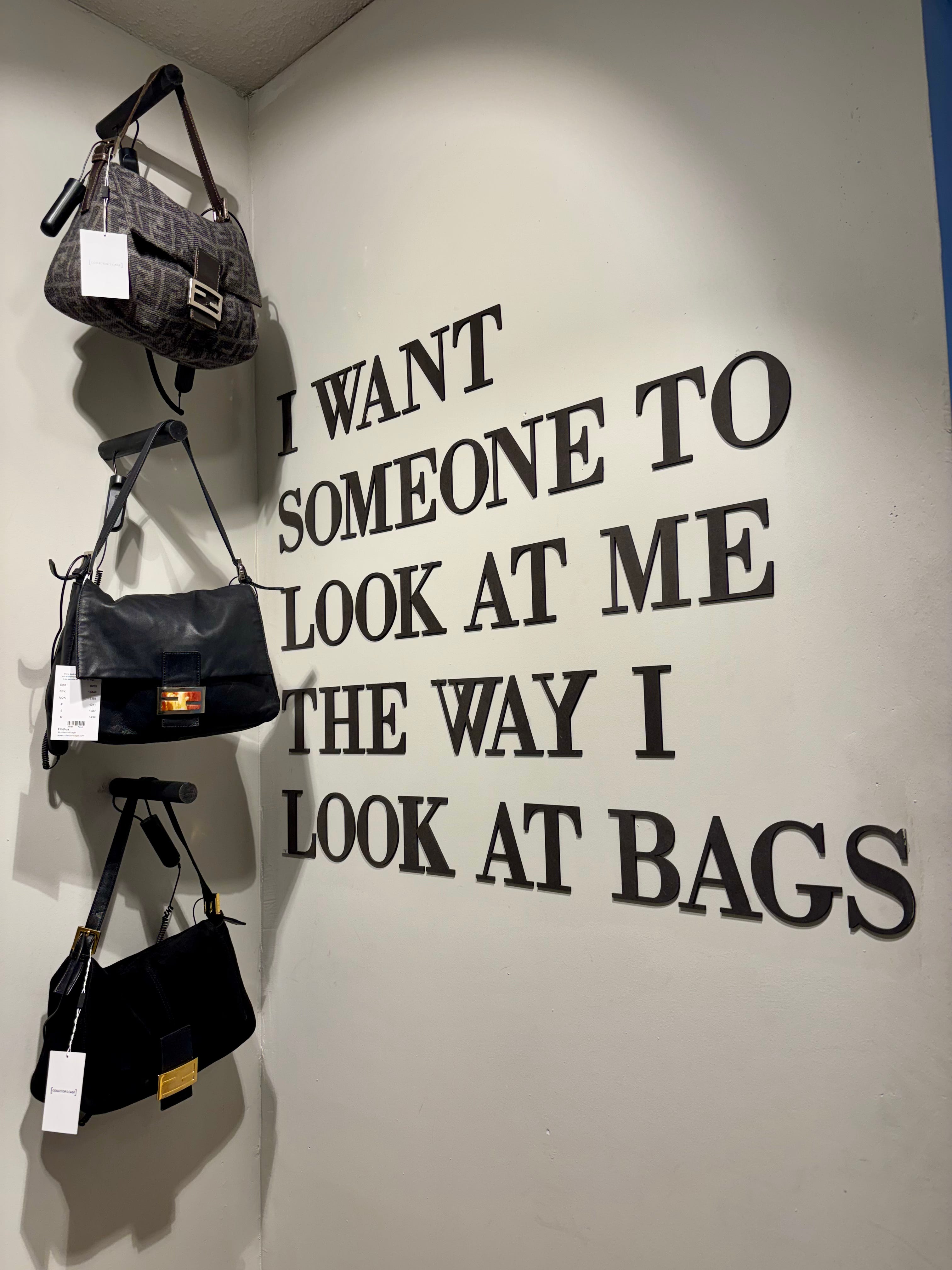
Collector’s Cage and Illums Bolighus rounded out the day, one for bags and one for browsing. Collector’s Cage understood that shopping should be entertaining; the space was lined floor to ceiling with designer handbags, and even the arcade crane game featured small leather goods. Illums Bolighus, a Danish home design store rather than a fashion store, was lovely just to walk through. I committed the ultimate comp shopping sin and never took out my phone. Old habits die hard, though. I still can’t walk through a store like that without my brain quietly filing everything away.
Our last stop of the day was ILLUM, the department store. I spotted a slouchy shoulder bag from across the floor and, for a split second, thought it was Michael Kors, which threw me since it looked nothing like the versions I’m used to seeing in the U.S. Up close, it turned out to be SILFEN Studio’s Hanna bag, a Copenhagen label whose soft, sculptural silhouette immediately caught my eye. My mom found her own small win on a different floor, a pair of Falke Hydrangea 20 DEN socks in Misty Lila, picked up for me without me even noticing until she handed them over later.
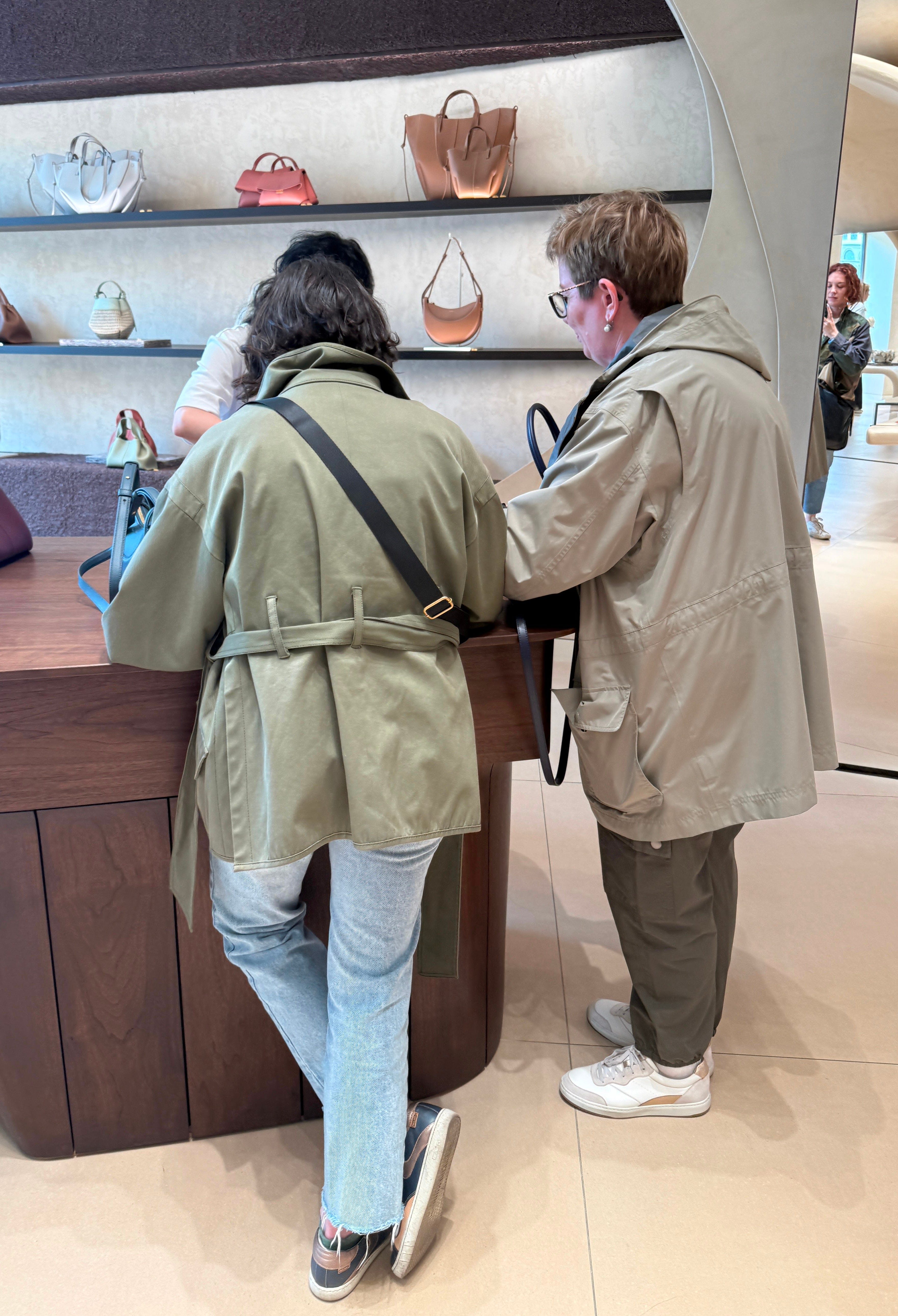
The bags we actually brought home weren’t on anyone’s shopping list. I almost walked past Polène because I figured we had one in New York, but my mom wanted to stop in. The Copenhagen boutique on Højbro Plads turned out to be its own destination, an arum-flower-inspired space with an “artisanship in action” corner where visitors fold little origami leather boat charms (sigh, we regret not picking one up), a nod to the Nyhavn canal a few blocks away. She and I ended up with matching olive Onda phone cases, while Aliza chose the Numéro Neuf Mini in Black Cherry. Funny enough, after all the vintage and designer hunting, those became the mementos that reminded us most of Copenhagen.
ILLUM’s beauty hall pulled me in too, with Scandinavian brands like Karmameju and RAAW Alchemy that I spent a while considering but never quite committed to buying. I thought I knew expensive after living in New York City for years. I figured I was already in Europe, so this would be the perfect opportunity to stock up on pharmacy staples. That theory didn’t survive Matas, the Danish pharmacy chain we kept running into all over the city. The La Roche-Posay Anthelios Dermo-Pediatrics SPF 50+ Milk (250 ml) I wanted to pick up for my son was nearly €40. The same sunscreen sells for about €17 at Pharmacie du Forum des Halles in Paris, so I left it on the shelf. It wasn’t just our perception either. According to the 2026 Post Office Travel Money City Costs Barometer, Copenhagen ranked as Europe’s second-most expensive city break destination after Oslo.
Maybe that’s the funny thing about researching a city too much. The internet promises hidden gems, perfect vintage finds, and the purchase you’ll talk about for years. Copenhagen didn’t quite deliver that for us this time, and that’s okay. The heritage tour and a phone case bag nobody put on a list did more work than the whole shopping list.
Riga: A City Worth Rediscovering
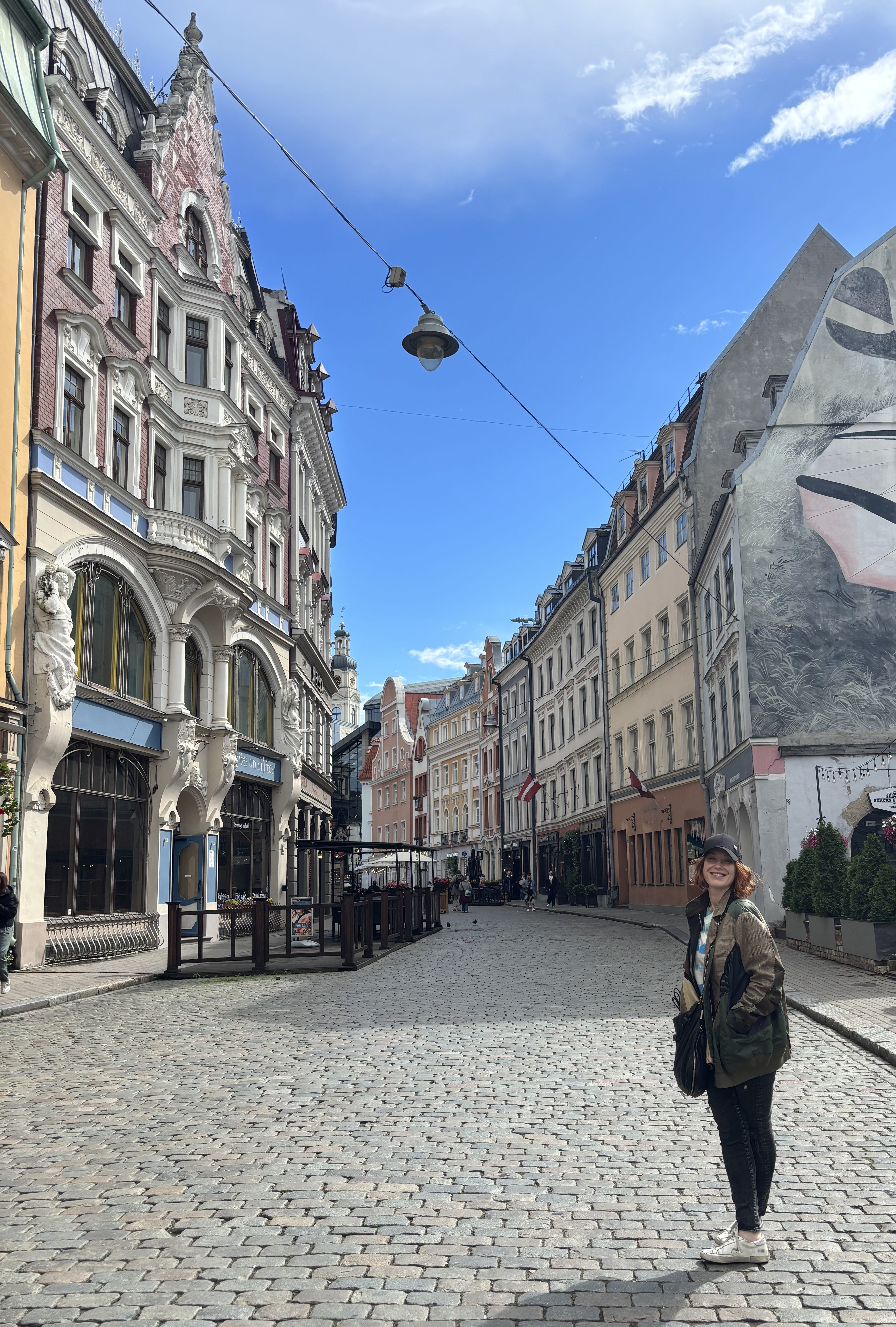
We landed in Riga still carrying Copenhagen’s mindset, expecting to have to work for anything worth finding. I’d forgotten, in all that bracing, that this city didn’t need me to go looking in the first place. I’ve always known about Riga. It’s where I came into existence, so I never thought of it as a hidden gem. Returning as an adult, I found myself wondering why it isn’t mentioned in the same breath as Copenhagen, Stockholm, or Helsinki. It once was. Between the wars, Riga was known as the “Paris of the Baltics,” a nickname earned by its Art Nouveau boom and a café and nightlife scene that drew diplomats and celebrities from across Europe. Though calling a city the something of somewhere else is its own kind of question. Is it ever seen for itself, or just measured against a place it was never trying to be? Even during the Soviet era, Riga remained the most cosmopolitan city in the region, close enough to a version of the West that visitors from Moscow and Leningrad came here to feel as if they’d crossed a border. It’s less of a comeback story than an IYKYK one. The world discovers cities through curated recommendations. I discovered this one by being born into it, and the gap between those two ways of knowing a place kept showing up everywhere we went here too.
