



Our lineage is confessional: It Happened to Me, Say Anything, Confessions of... But our beat is business, the insiders, the receipts, and the plays that actually move units and services. Beauty was always the starting point, but beauty isn’t the whole story. We’re about the entire journey: eyeliner, earrings, accessories, and the bag that carries it all! So we widened the lens. Insider now covers the people building anything beautiful, not just what goes on your face. Some interviews run anonymously so sources can speak freely. Every role is verified.
The Insider
Nina Andrade co-founded Sac de Soul with her sister Camila, the Guatemalan handmade bag label built on beadwork the two grew up around at their family’s home on Lake Atitlán. Nina trained at Central Saint Martins and leads design; Camila runs the business side, and together they work directly with a community of artisan women who turn each concept into a finished bag.
The Interview
Tell us about yourself. We first spotted your bags at Kirna Zabête in Miami. What’s the story behind starting Sac de Soul with your sister Camila, and why did it start with beading specifically?
Camila and I have always been very close, and creativity was a big part of our childhood. We were constantly painting, making things by hand, and inventing our own toys. We grew up with this instinct to look at something and imagine what else it could become.
We also spent a lot of time at our family home on Lake Atitlán, where we became fascinated by Guatemalan beadwork, its color, detail, and ability to create endless patterns and textures. As we grew older, our paths became very complementary: I studied at Central Saint Martins and developed on the creative side, while Camila naturally focused more on the business side.
While I was still at university, we decided to build something of our own. We first sold bags from a Mexican brand and reinvested the money into creating our own designs. Beading felt like the natural starting point because it was so connected to our childhood and to Guatemala.
From the beginning, we saw an opportunity to combine this ancestral technique with contemporary design and introduce it to an international audience in a new way. We started with handbags and are now exploring homeware as well, always thinking about how far beadwork can go.
Finish the sentence: “People assume Guatemalan craftsmanship means ______, when actually ______.”
People assume Guatemalan craftsmanship means repeating what has existed for generations, when, in fact, those generations of knowledge are the foundation for something entirely new.
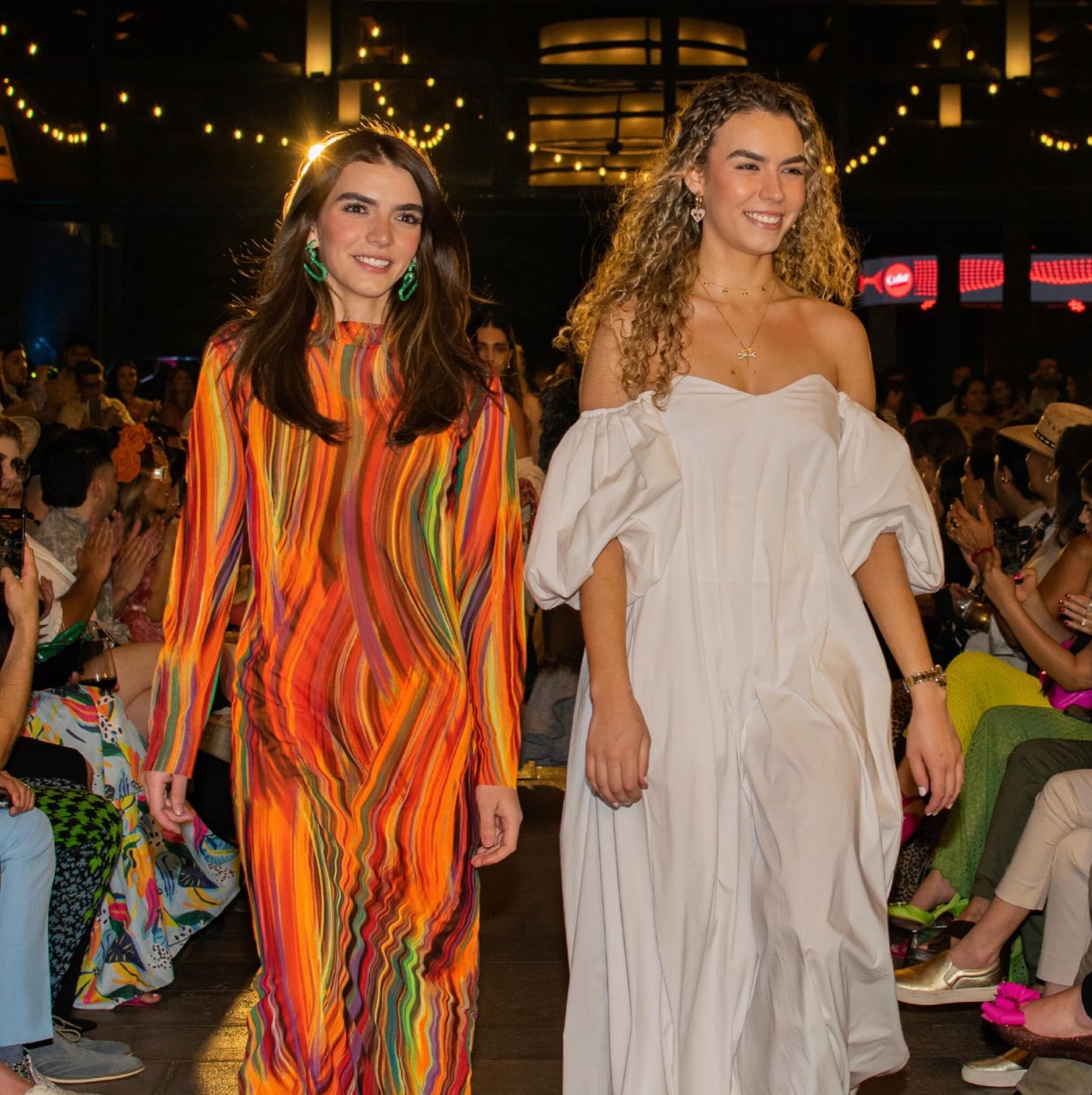
You work directly with a community of artisan women in Lake Atitlán. What’s something about that collaboration that outsiders always get wrong?
I think outsiders sometimes assume that working with artisans means taking designs that already exist within the community and simply bringing them to a wider market. That is not how we work. Camila and I develop the designs, color combinations, and the way we mix patterns and 3D and 2D textures, while the artisans are the technical experts who help us turn those ideas into reality. I often describe them as the engineers behind each piece.
We see ourselves as one collaborative team. We respect the value of their work, pay the prices they set, and never negotiate down their craftsmanship. They are not simply people producing for us; they are an essential part of Sac de Soul. We all want to see the brand succeed, but for us, that success should also mean creating opportunities and improving the lives of every person who helps make it possible.
What’s something unexpected people learn about craft in Guatemala once they actually see the process behind it?
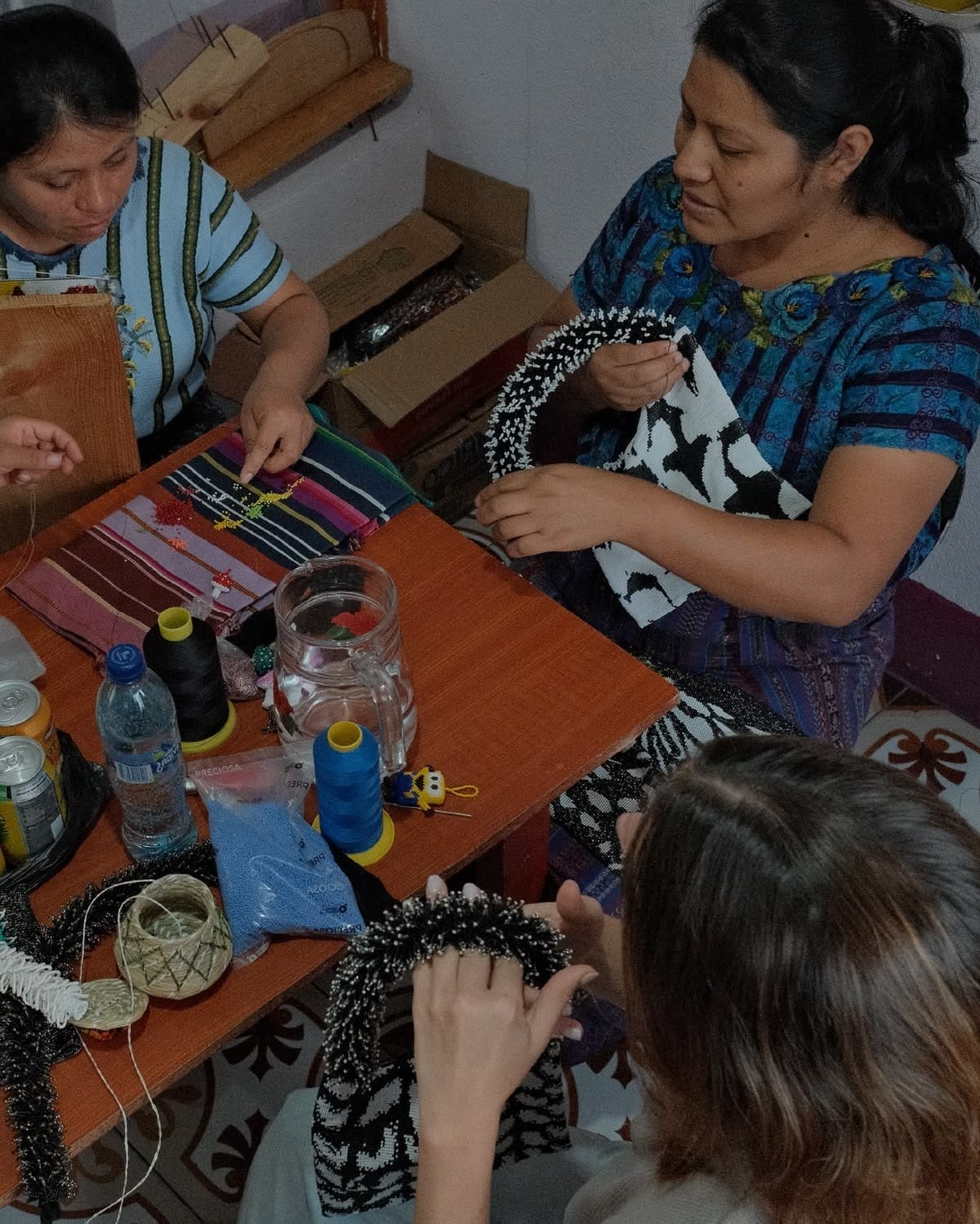
What surprises people most is the level of skill and precision behind it. The artisans work incredibly quickly, but every movement is exact, and there is almost a science to how each piece is constructed.
Camila and I have tried the technique ourselves, and it is far more complicated than it looks. Once you see the process up close, the time, concentration, and thousands of tiny decisions behind one bag, you understand that it is not simply handmade. It is a highly specialized craft that takes years to master.
Your collections are named Camila, Nina, Serpent, Felidea. How do you actually land on a name, and does it come before or after the design?
We do not have a fixed process; it can come before or after the design. Some names are deeply personal: Camila and Nina are named after the two of us, and Alessia is named after my daughter. It is our way of honoring the women who are part of the creative story of Sac de Soul.
With names like Serpent or Felidea, we keep them very raw and direct. Our pieces are already intricate and expressive, so we like the name to feel simple. The more there is happening in the design, the less we feel the name needs to explain.
What’s in your own Sac de Soul bag right now? Walk us through it.
Right now, I’m carrying our pink and burgundy Serpent Mini. I’m very simple with what I carry: just my phone, cardholder, keys, and usually one or two little bows that my daughter has taken out of her hair.
I never carry too much, especially in a Sac de Soul bag. They are delicate pieces, so I like to keep only the essentials inside.
Keep, kill, scale: hand-beading, made-to-order production, limited drops.
Keep hand-beading, scale limited drops, and kill or at least reduce made-to-order production. Hand-beading is at the heart of Sac de Soul, so that will always stay. We would like to move away from relying so heavily on made-to-order and have more pieces readily available. At the same time, we want to scale limited drops: special designs available only for a few months, rather than becoming permanent signature styles. I love the idea of creating that sense of rarity around certain pieces.
What’s a design decision you and Camila have genuinely disagreed on, and who won?
“Usually, Camila tells me, ‘Trust me,’ we make the sample and she ends up being right.”
We have never had a dramatic design disagreement because our roles are quite clear. I lead most of the design work, but I always bring everything to Camila because our tastes are very different. I am naturally more classic, while she loves bold patterns and a lot of color. That contrast is actually part of what makes the collections feel balanced.
We occasionally disagree over a color combination. Usually, Camila tells me, “Trust me,” we make the sample, and she ends up being right. So, in those cases, Camila wins.
Working with a sister as a co-founder gets romanticized. What’s the real version of that dynamic behind the scenes?
The real version is that there are definitely ups and downs. We are sisters, but also best friends and business partners, so sometimes things can become intense. We may need a few minutes or a few hours to step away, breathe, and come back to the conversation.
But underneath everything, there is complete trust. I know she has my back, and she knows I have hers. There is something incredibly special about building a dream with someone I have known her entire life, someone I saw on the day she was born. Being able to watch her grow, evolve, and reach all these milestones while building Sac de Soul together is something I would never take for granted.
Buzzword you’d retire from the “heritage brand” conversation immediately?
“Preserving tradition.” Craft should not be treated as something that has to remain frozen in time. For us, respecting heritage also means giving it space to evolve, experiment, and become relevant in new ways.
Receipts or it didn’t happen: how long does one bag actually take to bead, start to finish?
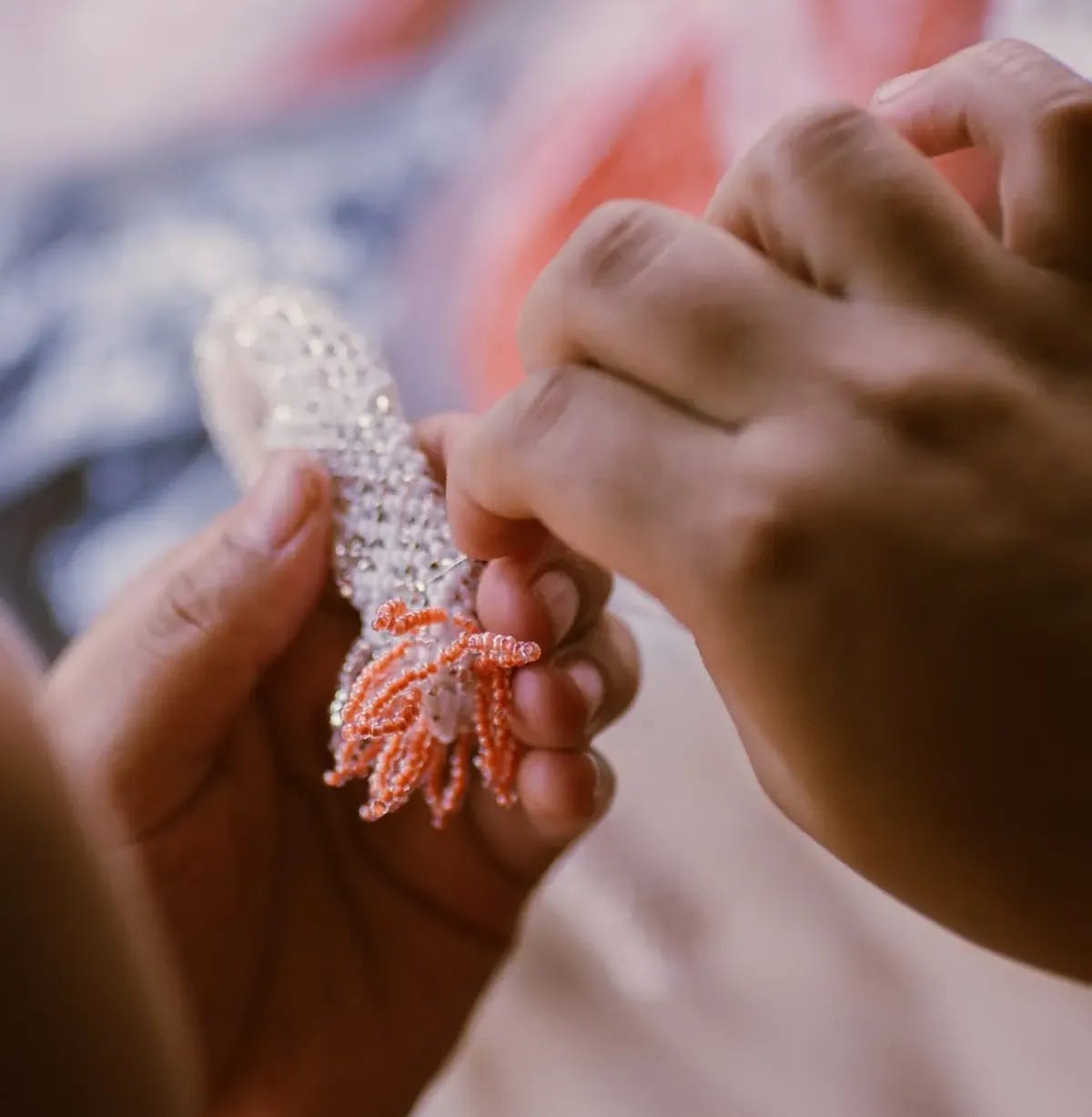
Depending on the design, one bag takes around five to eight working days to complete from start to finish. It also passes through the hands of three different women: one beads the body, another creates the handle using a different technique, and a third carefully joins the two pieces together.
So while it may look like one object, each bag is actually the result of several specialized hands working together.
If you could design the ideal storytelling moment for your bags on a retail floor, what would that look like? These aren’t just evening bags, so would you put them with fashion, with accessories, with beauty, somewhere else entirely, and why?
I would place them within fashion, but present them with the attention usually given to art or fine jewelry. They are not simply evening bags; they are wearable art pieces.
Because every bag is made by hand, no two are completely identical. Each one passes through several specialized hands and carries its own small variations and story, so it should not feel lost among rows of factory-made accessories.
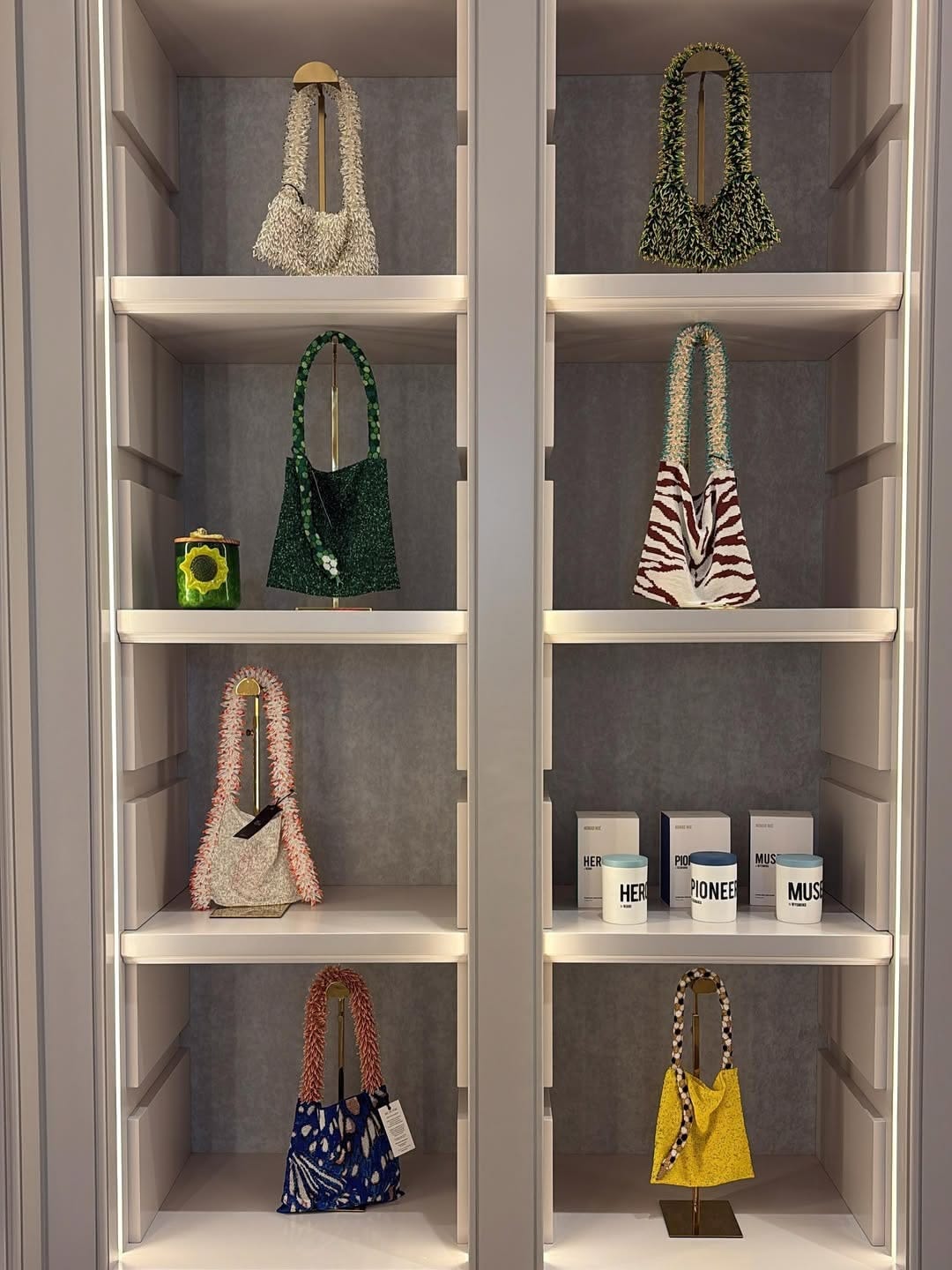
Some of our retail partners display them alongside jewelry because they see them as wearable jewels, and I love that approach. At Kirna Zabête, each bag was given its own space on the shelving, almost like an individual art object. That would be my ideal retail moment: enough space for people to stop, look closely, and understand that they are seeing something made slowly and by hand.
Getting into Kirna Zabête, Cult Mia, and Anthropologie is the dream for most emerging accessories labels. What actually changed once you were there, beyond the obvious?
Being stocked by major retailers whose curation we have admired for years has been incredible. Each one has felt like an important milestone because it means they see something relevant and special in what we are building.
Beyond the obvious excitement, the biggest change has been confidence. It reassures us that we are moving in the right direction and that the work, sacrifices, and risks are paying off. Seeing the bags perform well and knowing there is real demand gives us the confidence to keep pushing forward. It tells us that people are connecting with the product, understanding the story and recognizing the value behind it.
“At Kirna Zabête, each bag was given its own space on the shelving, almost like an individual art object.”
What’s a price point conversation you’ve had with a retailer that made you want to walk out of the room?
It is usually not the price point itself that makes us want to walk away. It is when a retailer expects the price to come down, or the margins to increase, without considering what it actually takes to make each piece.
Our bags are made slowly, by hand, through several specialized stages, so there is a limit to how much the cost can be reduced without compromising the craftsmanship or undervaluing the people behind it.
Most retailers understand that once they see the product and learn about the process. The difficult conversations happen when a handmade bag is expected to operate under the same pricing structure as something factory-produced at scale. That is when we have to be very clear about the value of what we make.
Blind item: a wholesale account or collaboration that looked glamorous from the outside but was a headache behind the scenes.
There was one potential collaboration that looked incredibly glamorous from the outside. Everything seemed ready to happen, and then, at the last minute, it did not unfold as we had imagined. What followed was unclear communication and ongoing conversations about where the product actually is.
We always try to look at these experiences positively. Even though the collaboration did not materialize as planned, there was genuine interest in Sac de Soul, and we do not take that lightly. It taught us to be more careful, but also reminded us that the brand is reaching people and entering conversations we once only dreamed of.
What’s a print or color combination you were nervous to release, and how did it actually sell?
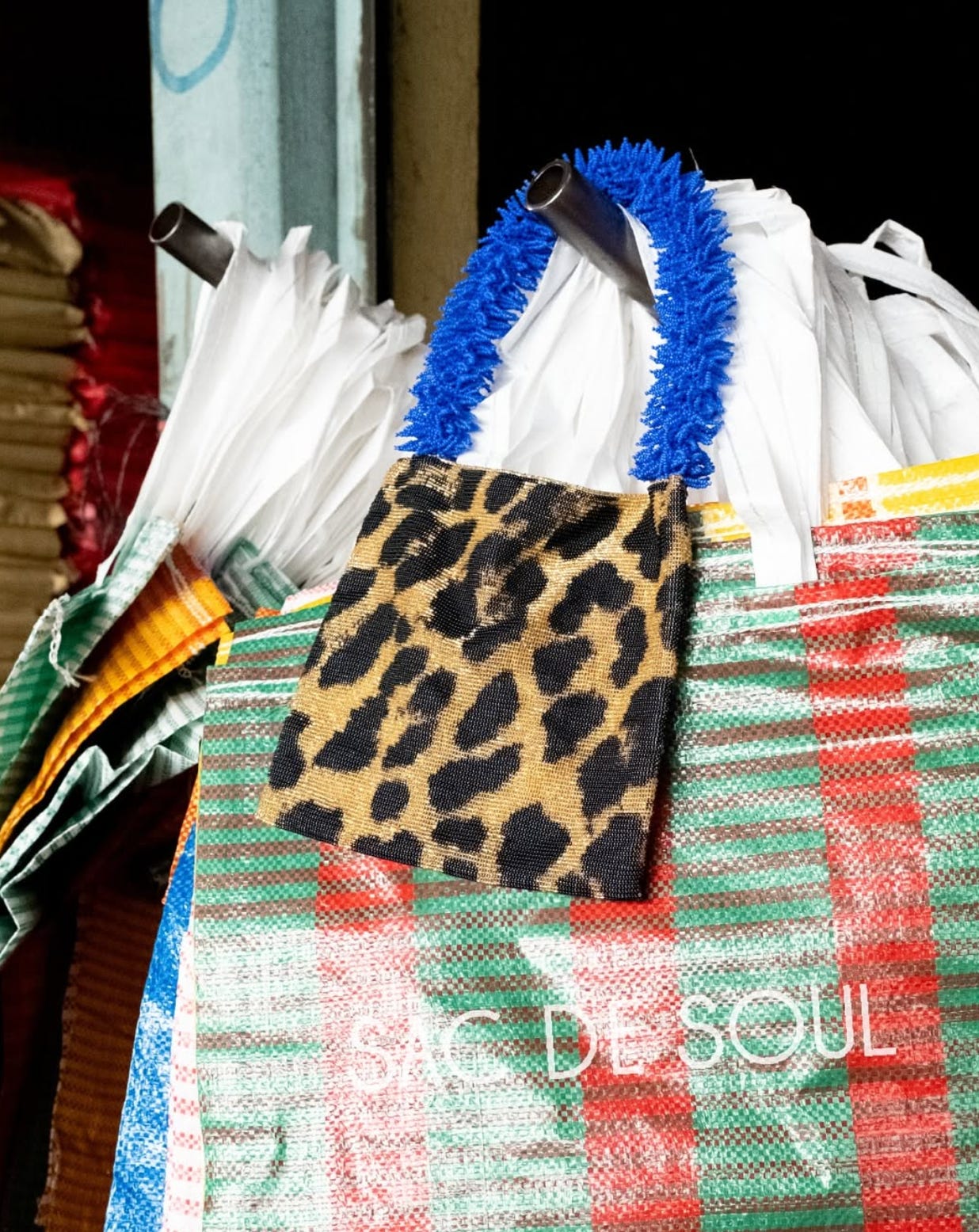
We were nervous about releasing our Clash of Prints Leopard bag with the blue handle because it felt quite bold and unexpected. It ended up becoming one of our signature bestsellers almost immediately, and two years later, it still is.
It is one of the styles retailers choose most often, stylists continually pull it for their clients, and customers regularly scroll back through our feed specifically to ask about it. What I love most is seeing how differently people wear it: it can be dressed up or down, and somehow it always makes sense. It reminded us that sometimes the design you are most uncertain about is the one people connect with most.
Spiciest take on the handbag industry, five words or fewer.
Craft belongs beside established names.
Do you get high on your own supply? What’s the one Sac de Soul bag you refuse to sell because you kept it?
Absolutely, but the bags we refuse to sell are usually the ones that mark important moments in Sac de Soul’s story. We create one-off pieces with details such as the address of a first stockist or the name of a store connected to a major milestone, and then frame them in our office. They form an achievement wall that grows with the brand, and no one else will ever own those exact bags.
Of course, Camila and I have our personal favorites, but that changes constantly. Every new sample or color combination becomes the one we are suddenly obsessed with. Each piece carries the story of its development: the experiments, adjustments, and hours behind it, so we feel personally attached to almost everything we release.
Last confession: what’s one true thing about building a craft-based fashion brand that would get pushback in a room full of DTC founders, and the evidence that backs you up?
Not every successful brand needs to scale quickly. There is often pressure to produce more, lower costs, and deliver faster, but a craft-based brand cannot be measured by the same standards as a factory-made one.
We still work in small quantities and largely on a made-to-order basis, yet retailers continue to approach us, place orders, and wait for the pieces to be completed. Our slower process has not held us back; it is one of the reasons people are drawn to Sac de Soul.
The evidence is in the partners who have chosen to work with us, from Kirna Zabête and Anthropologie to Cult Mia, luxury hotels, and museum stores. They are not choosing us despite the time and craftsmanship involved. They are choosing us because of it.

Sac de Soul ships worldwide at sacdesoul.com and is stocked at Kirna Zabête, Anthropologie, and Cult Mia. Fair warning: you will want one!
Counter Intelligence runs on tips. Got someone we should be talking to, or want the floor yourself? Email gingergeist@gmail.com; anonymity is on the table.
