


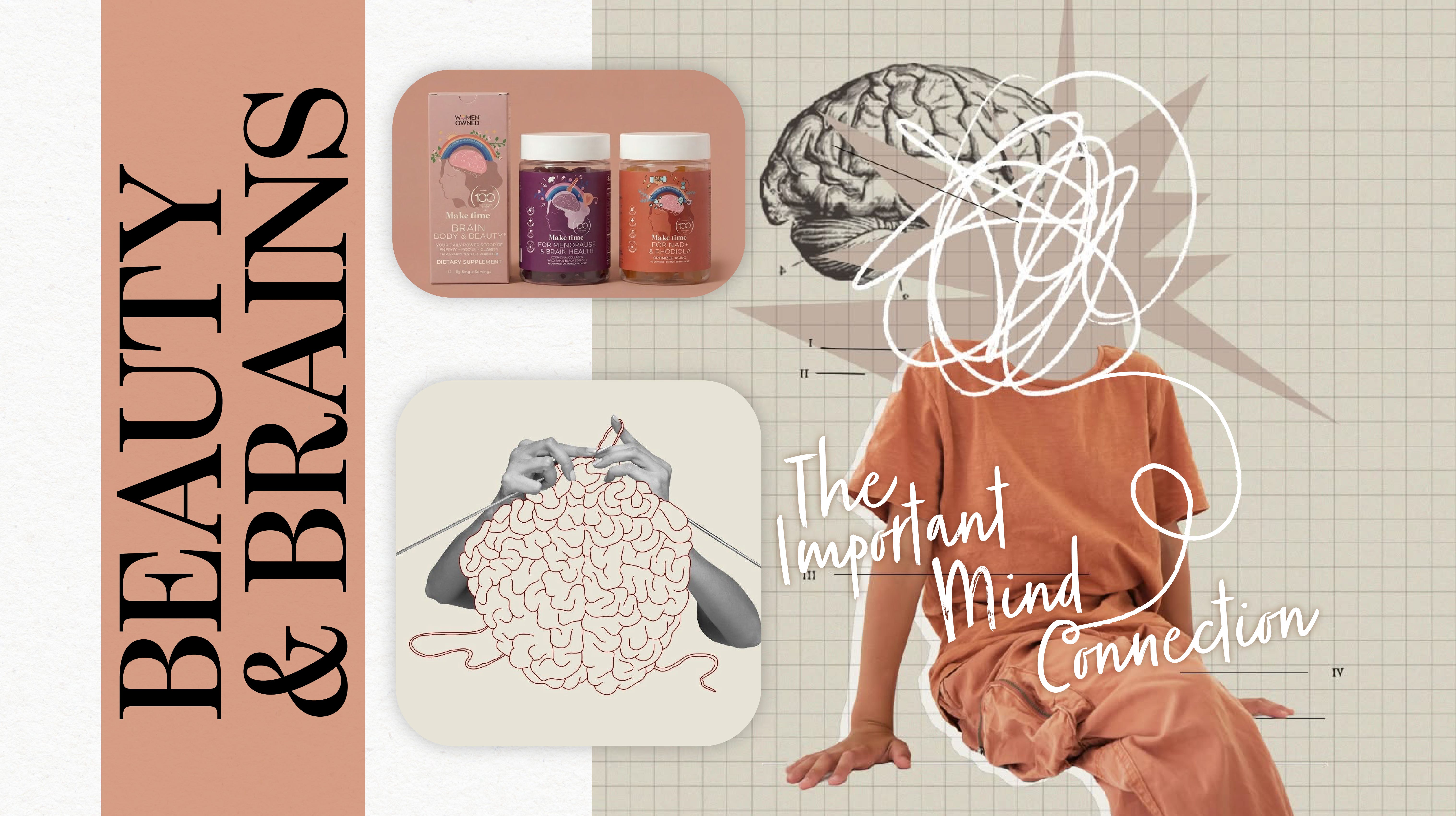
Brain health is deeply personal to both Michelle and me. Our grandmothers were each impacted later in life, and that experience has stayed with us both. As Alzheimer’s and Brain Awareness Month runs through June, we want to bring attention to the intersection of brain health and beauty, because the two are more connected than most wellness conversations acknowledge.
According to the Alzheimer’s Association, a woman’s estimated lifetime risk of developing Alzheimer’s at age 65 is 1 in 5, compared to 1 in 10 for men. One in nine people over 45 experiences subjective cognitive decline. More than three in five unpaid Alzheimer’s caregivers are women, and women account for nearly two-thirds of all Americans currently living with the disease. An estimated 7.4 million Americans age 65 and older live with clinical Alzheimer’s dementia today. Without intervention, that number could reach 13.8 million by 2060. The Alzheimer’s Association encourages visitors to take the (re)think your brain™ 6-Step Challenge for a simple guide to better brain health.

“Brain rot” Isn’t Just A Meme For Gen Z
It’s also a medical concern. A 2025 Yale School of Medicine study shows that many young adults have recently reported challenges with memory and thinking. For 18-34-year-olds, the rate of “self-reported cognitive disability” jumped from 5.1% in 2013 to 9.7% in 2023, outpacing the rate among adults overall, which jumped from 5.3% to 7.4% over the same 10-year period. These cognitive issues could reportedly have major societal and economic consequences, such as costing the global economy $1.3T due to potential impacts on workplace productivity. These issues are often attributed to long-term exposure to devices, social media, and short-form content. Young adults are already increasingly craving screen-free moments and taking up offline hobbies, so these stats might continue to push them away from racking up screen time.
Interestingly enough, for older adults, the picture is more nuanced. Researchers who analyzed dozens of studies found that people over 50 had a 58% lower risk of cognitive decline if they regularly used phones, tablets, or computers. The Washington Post points to what researchers call the three C’s: complexity, connection, and compensatory behaviors. That includes digital crossword puzzles, staying in touch with friends, or even using GPS navigation. So do not roll your eyes the next time grandma sends you a reel.
Supplements To The Rescue
To support cognitive function and mitigate issues, brands like Neuriva (which we wrote about in our recent Costco dive) and Prevagen have become common aids. As the topic and the surrounding confusion continue to grow, GoodRx and other media outlets have recently sought to shed light on the best supplements for brain health. With a family history of Alzheimer’s and dementia, I have long looked to supplementation as preventative care. That journey began with krill oil, chosen for its astaxanthin content and high concentrations of omega-3 fatty acids (EPA and DHA), which work together to combat brain inflammation. More recently, Andrew Lessman’s Ginkgo and Ginseng Capsules have been a consistent part of my routine, offering the highest-quality standardized extracts of two of traditional Eastern medicine’s most treasured botanicals. His Memory & Brain formula has also been well worth noting.
A few years ago, while trying to make sense of her “mommy brain,” Emma Heming Willis, wife and caregiver for actor Bruce Willis, had her doctor introduce her to the concept of brain health, two words that completely changed how she approached her overall wellbeing. She quickly learned that when she prioritized her brain, the rest of her body followed. That shift simplified her wellness journey and inspired the creation of Make Time. In the wake of Bruce’s frontotemporal dementia diagnosis, she found a new purpose. While navigating multiple supplements that were time-consuming and out of reach for many, she and co-founder Helen decided to turn that frustration into a global conversation and product line. Make Time is now available at Target, The Vitamin Shoppe, and Ulta, with a one-and-done daily powder and gummies designed to simplify and democratize access to brain care. Quality sleep is also a critical factor in supporting cognitive health.
The New York Times recently reported on the topic with The Mushroom Gummies That Claim to Stimulate Your Brain. The piece focuses on WonderDay Mushroom Gummies by Plant People, a Unilever-backed startup whose founders say it is already the number-one bestseller at the California cult grocer Erewhon and has since expanded into Target, Sprouts, and Whole Foods. Other recent brain health entries take a broader systems approach, like Cymbiotika. Thorne Brain Factors works with coffee fruit extracts and BDNF, a substance the body produces naturally to support the growth of brain and nerve cells, while also increasing NAD+.
Speaking of coffee, a now-classic option I keep coming back to is Moon Juice Brain Dust, which includes a recipe for Brain Butter Coffee that combines the Dust with 8 oz of hot coffee and 1 tablespoon of ghee or coconut oil. And for a younger audience that is increasingly dealing with cognitive concerns, Codeage’s Teen Brain Focus Vitamins+ is worth knowing about, featuring Cognizin, a patented, well-studied form of citicoline, alongside L-theanine, magnesium, and a B-vitamin complex, formulated specifically for teenagers aged 12 to 18.
The category momentum behind all of this is real. A May 2026 SPATE Wellness and Functional Foods Trend Alert found that functional-focus gummy supplements are among the fastest-growing segments in wellness right now, still early in adoption but gaining momentum quickly. Interest in focus gummies has grown 217% year over year, with TikTok driving 44.5% of the popularity share, itself up nearly 390% year over year. Brain fog is the primary concern consumers associate with the category, indicating that people reaching for these products are frequently seeking support for a very specific issue. Key ingredients gaining traction include acetylcholine, a neurotransmitter linked to memory, learning, attention, motivation, and arousal, and lion’s mane, an adaptogenic mushroom associated with cognitive support. Leading brands include Olly and Lemme Focus, both established wellness names with broad supplement ranges.
Why It Matters
We genuinely hope that women’s cognitive health becomes a standard part of the annual well-woman visit, creating earlier opportunities to slow the progression of Alzheimer’s and related dementias. The beauty and wellness industries are already moving into this space faster than medicine can keep up, and the brands paying attention right now are the ones that will own this conversation for the next decade. Brain health deserves the same serious, beautiful, dare we say playful attention that skin, sleep, and hormones have already received.
